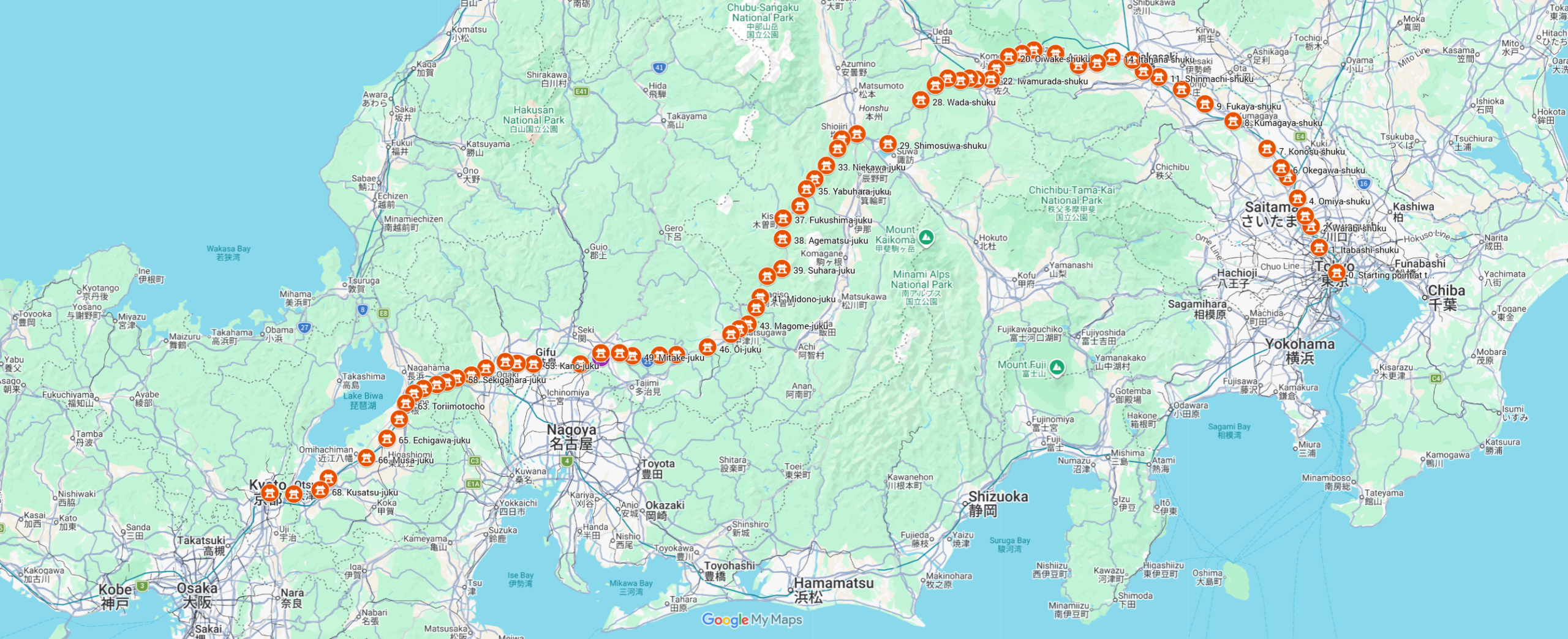
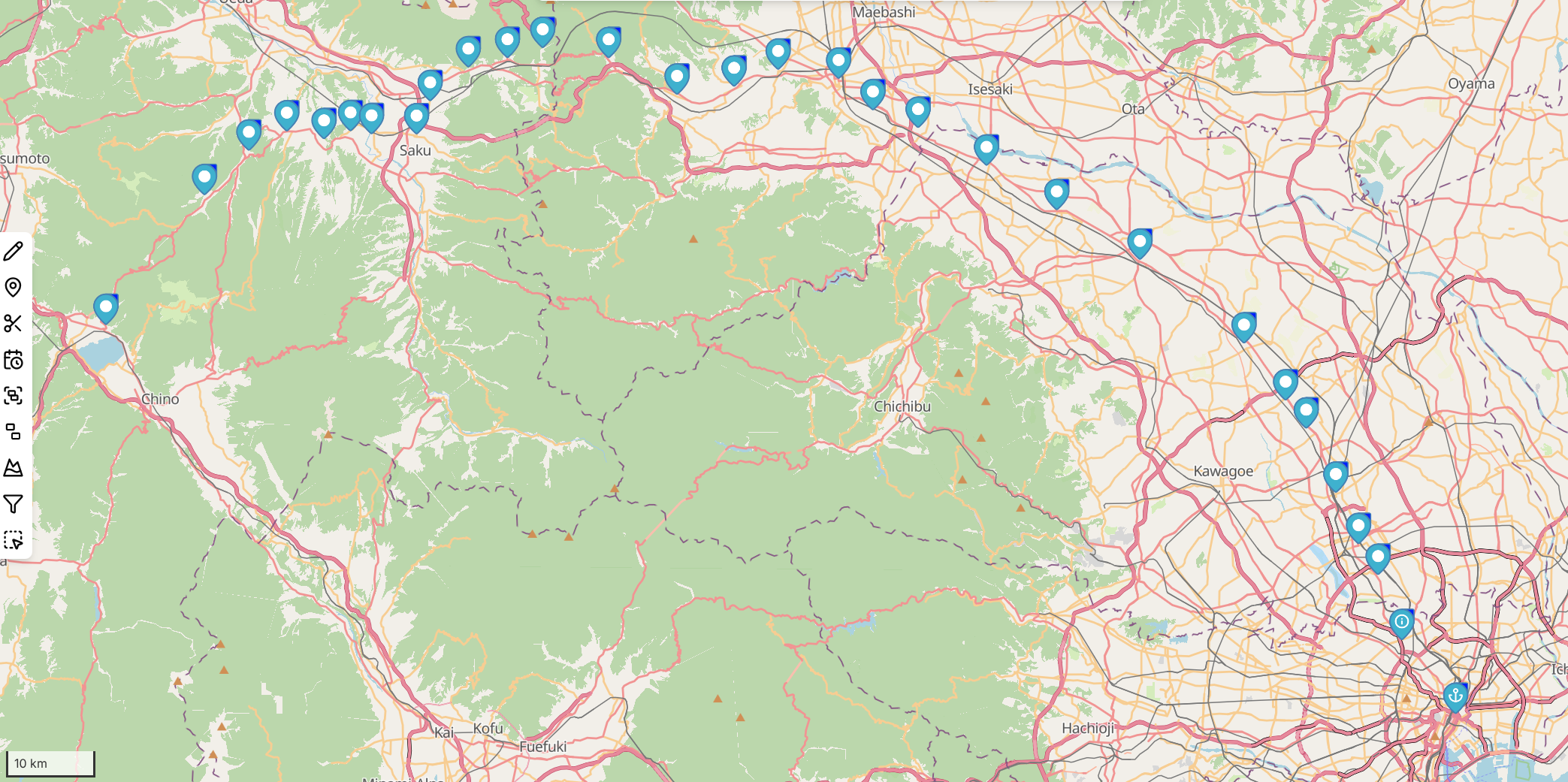
There were sixty nine post stations along the Nakasendō, numbered from Tokyo to Kyoto. This page is a list that presents and describes all those post stations, one blog post for each of them, as well as for a few missing ones that were removed when the Nakasendō path changed over the years. The Japanese word for these post stations is shukuba (宿場) and they were not unique for the Nakasendō specifically. All the five major roads during the Edo period, created by Tokugawa Ieyasu at the start of the 17th century, had their own set of shukuba. For instance, the Tōkaidō which also went from Tokyo to Kyoto but followed the coastline instead of going across the central mountains had fifty three post stations. It shared the two post stations closest to Kyoto with the Nakasendō, but the rest were unique.
-
1. Itabashi-shuku
Itabashi-shuku is the first post station of the the sixtynine along the way from Tokyo towards Kyoto. In the beginning it was composed of three different, smaller hamlets called, in the order coming from Tokyo, Hirao-shuku, Naka-shuku, and Kami-shuku. Hirao… …more
-
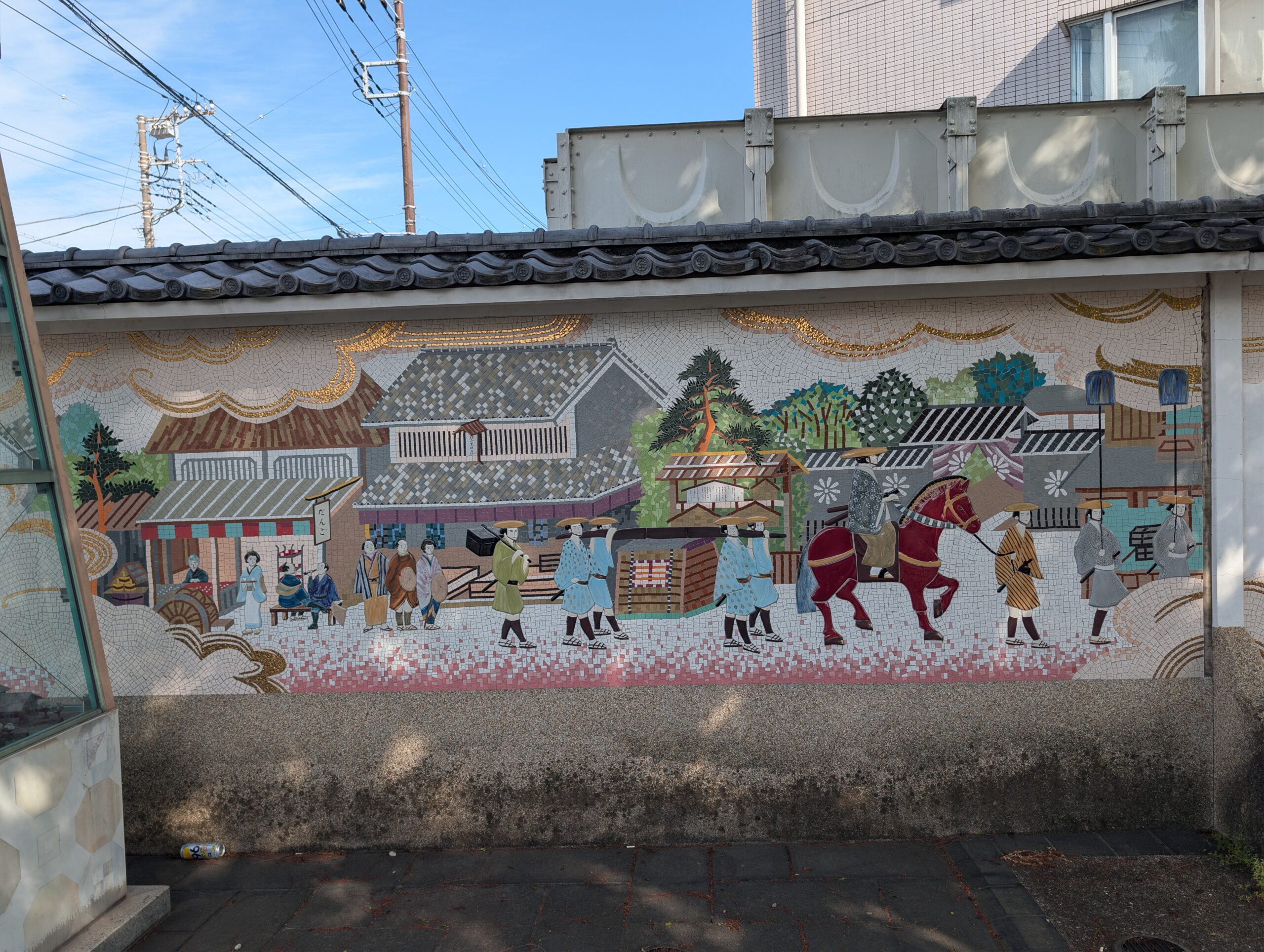
2. Warabi-shuku
Warabi-shuku, the second post station from Tokyo, was famous for its weaving industry during the Edo period. There were several textile factories, store houses filled with cloth, cotton and threads, merchant houses selling their products, and a contingent of people,… …more