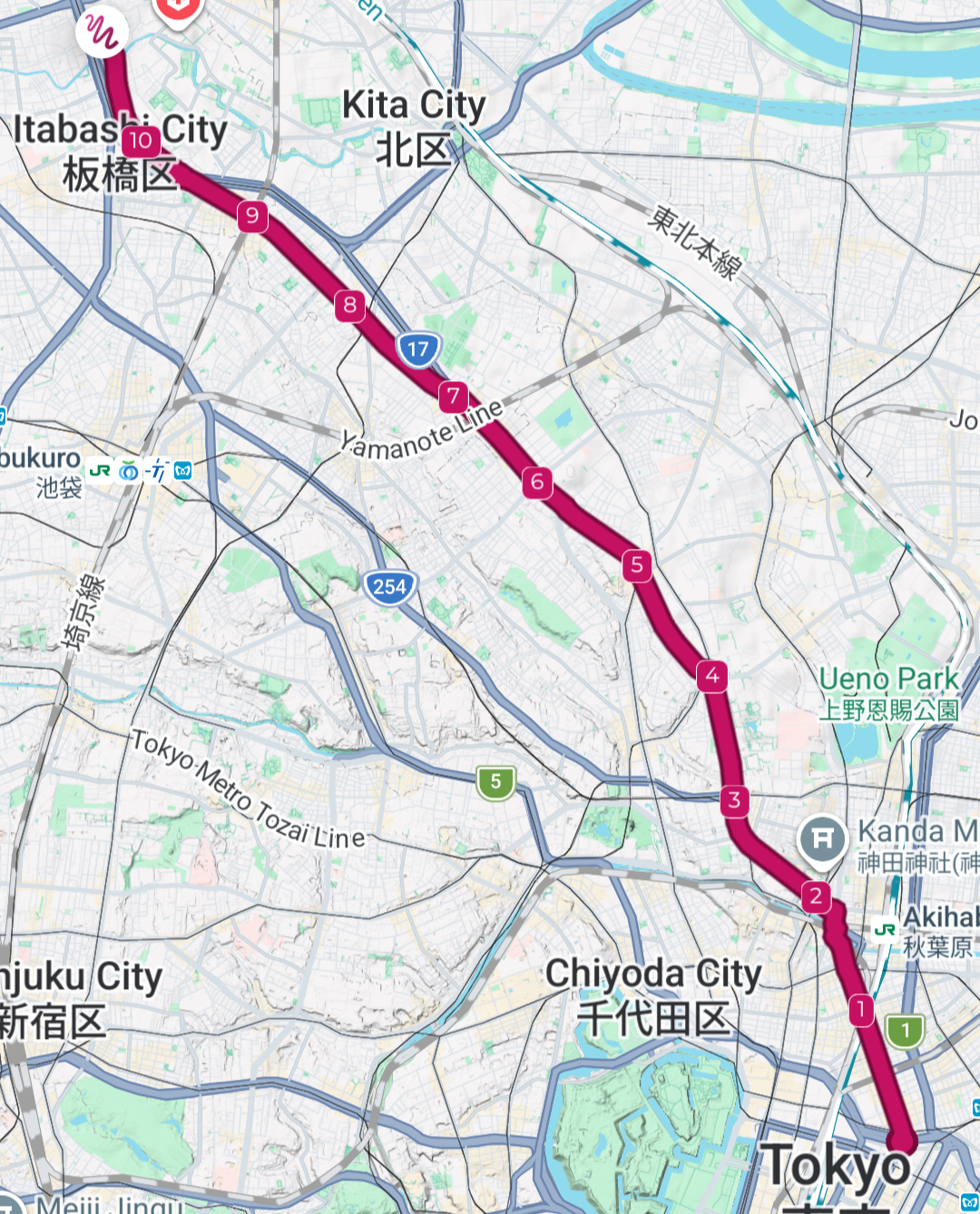
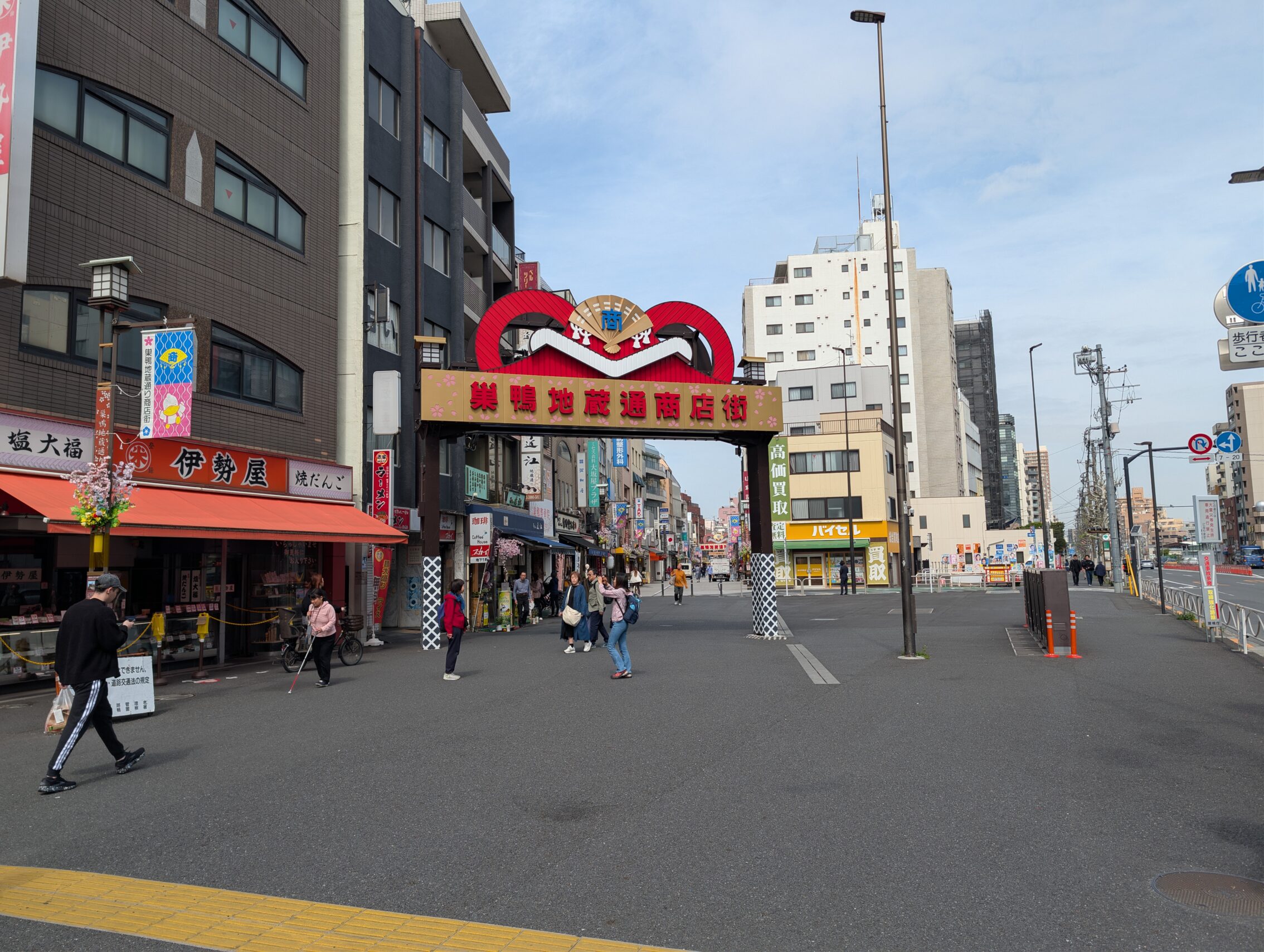
The first leg of the journey, between the starting point in central Tokyo, to the first shukuba, or post town in Itabashi is almost 11 kilometres long. The path follows the general direction of the National Route 17, even though you spend a lot of the time on smaller, parallel streets. One of the highlights is the Jizo dori shopping street which used to be a seed market back in the day. It begins at the seven-kilometre mark.
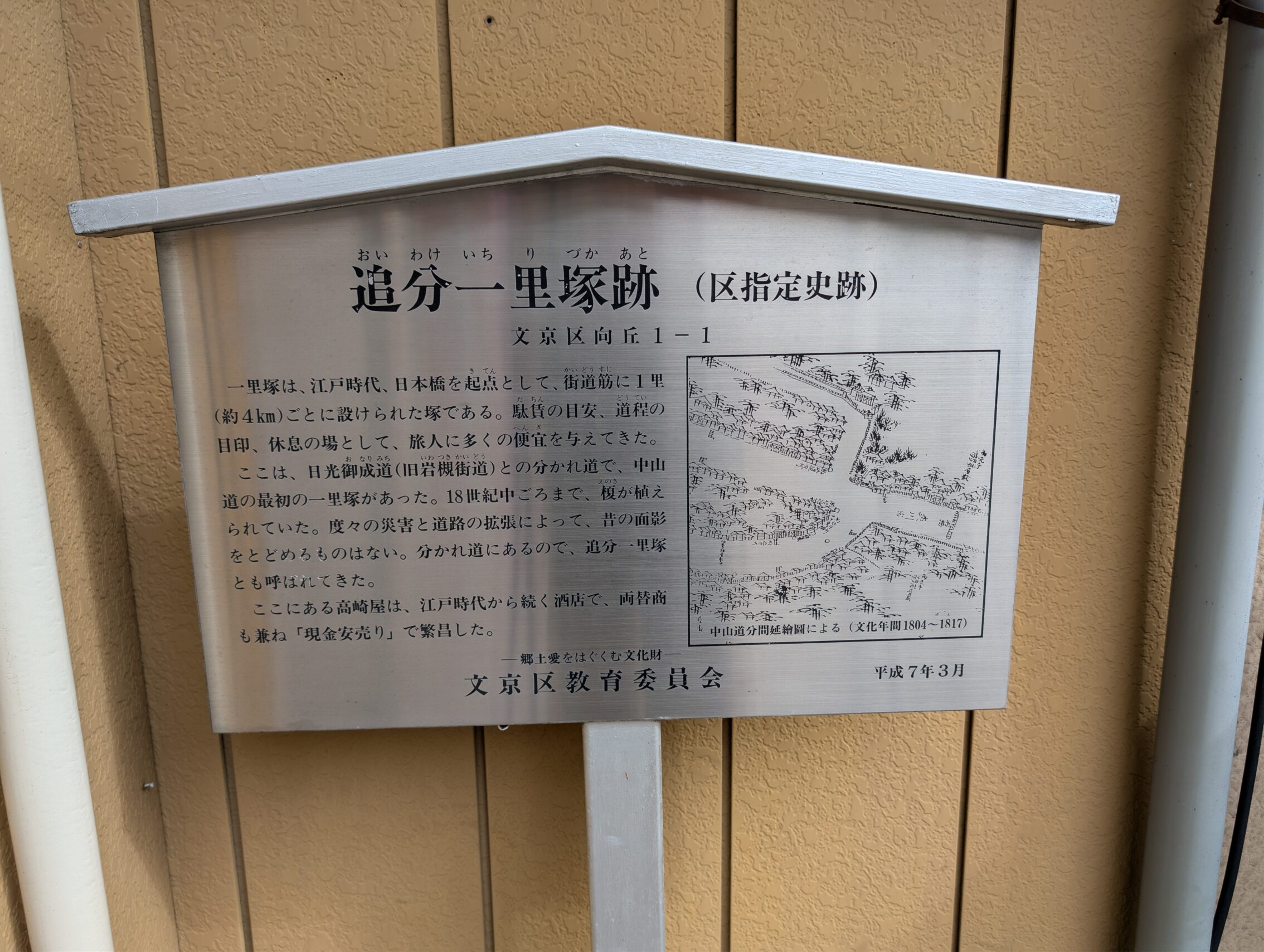
At the 4-kilometre mark, you come to the Hongo Oiwake ichirizuka. The ichirizuka were milestones that were placed every 3.9 kilometres along the whole path from Tokyo to Kyoto. Calling them milestones is a bit of a disservice as they were mandated to be two big mounds of earth, each about nine metres in diameter, and about 2 metres high. Often there was a tree growing on top of each of the mounds as well. This milestone was placed at a fork in the road, as it was here that the Nikkō Kaidō and the Ōshū Kaidō, two of the other five main roads, diverged from the Nakasendō. They headed straight on where our path took a left-hand turn. According to legend, the liquor store Takasaki-ya was founded at this fork in the road back in 1751, and has been in the same place ever since.
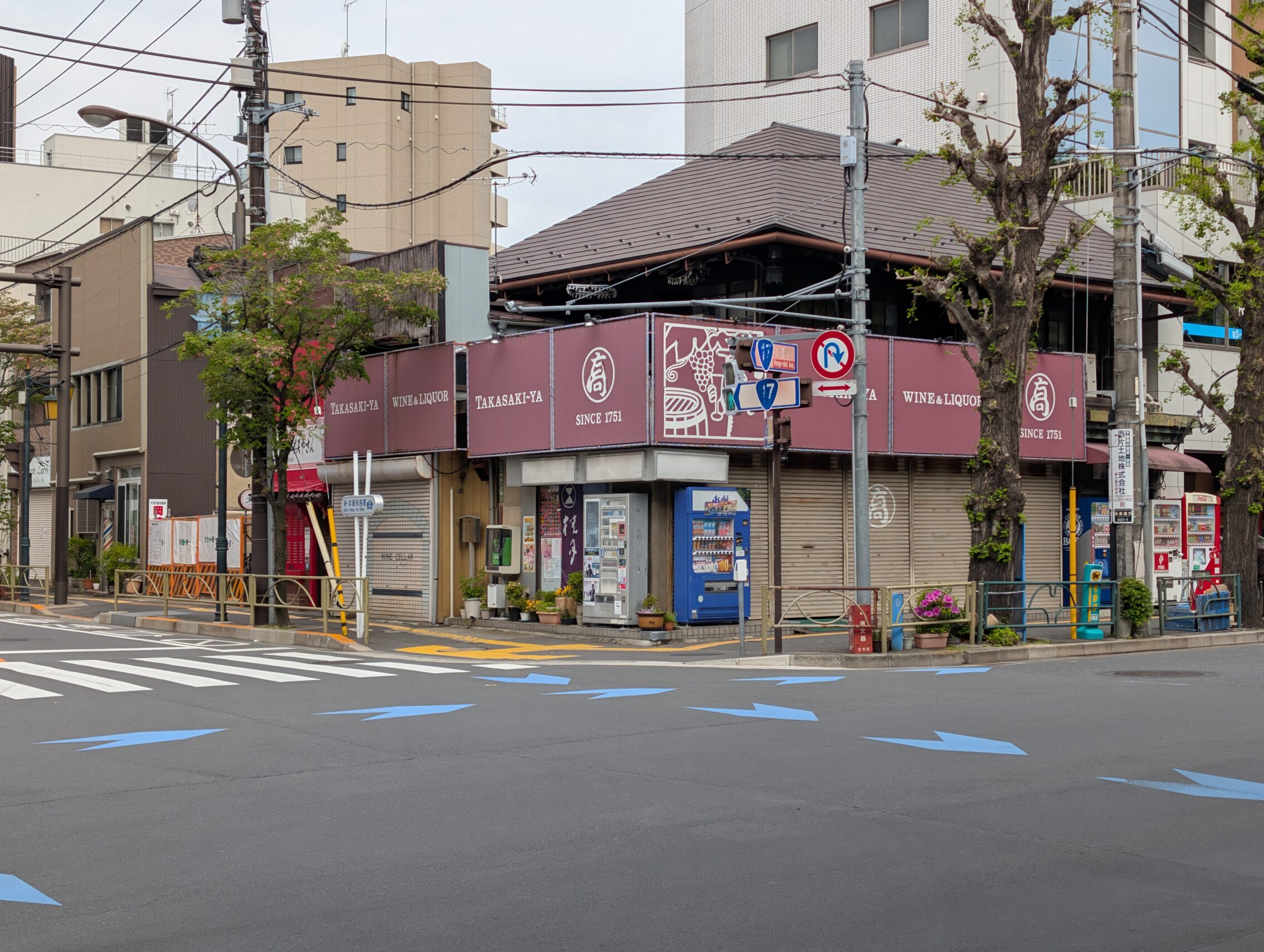
There is absolutely nothing left of any mounds of this milestone, but there is a small sign commemorating the ichirizuka.
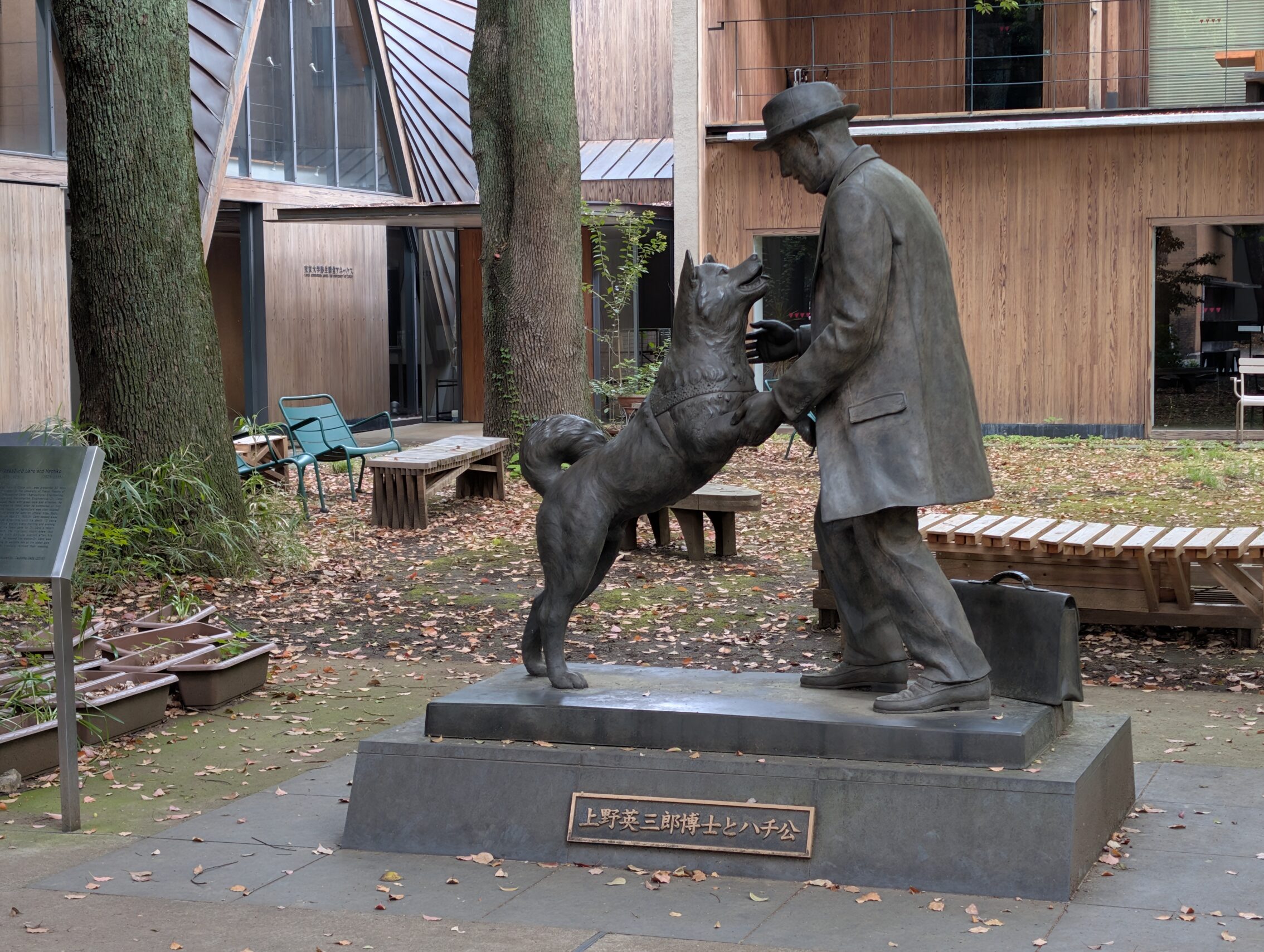
There is also an entrance to the University of Tokyo just opposite the liquor store, and behind those gates to the left is another statue of the famous dog Hachikō, who waited for years on end near the Shibuya station for his owner who had died one day at work in the 1920s. This statue is called “Hachikō Greeting Professor Ueno” and was unveiled in 2015.
The Hirao ichirizuka was second along the road, at around the 8-kilometre mark. Unfortunately, there isn’t even a memorial plaque or information sign, much less any actual remains left where it used to be. So no pictures.
The Jizo Dori shopping street is difficult to miss. The gaudy portal guards the entrance, and there is another portal every so often going north. The street is filled with small shops and restaurants, and was bustling with activity rather early in the morning this Saturday. During the Edo period this place grew into a wholesale seed market, because of travellers wanting to bring different kinds of seeds home in order to be able to eat the stuff they had tasted while in Edo.
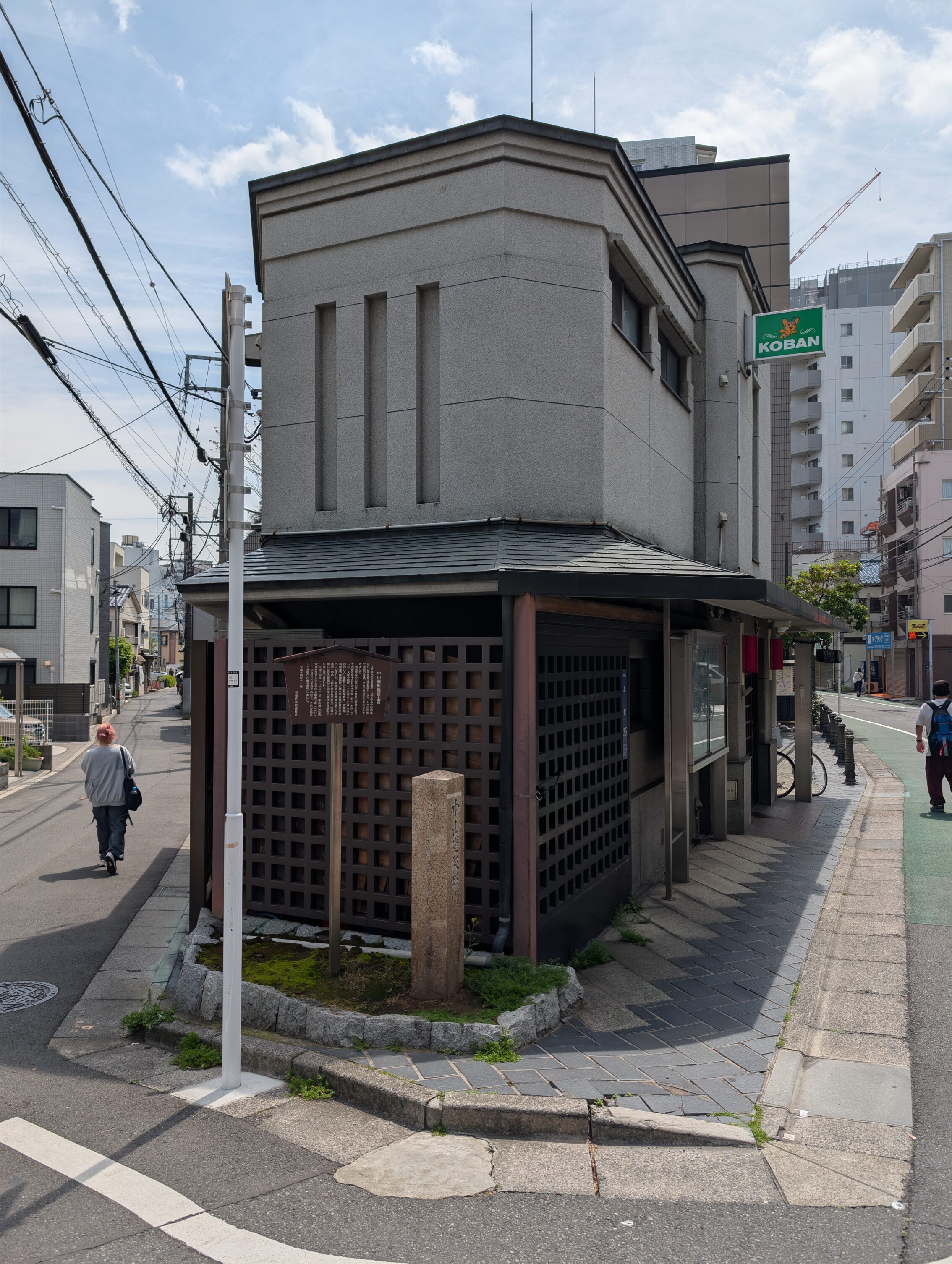
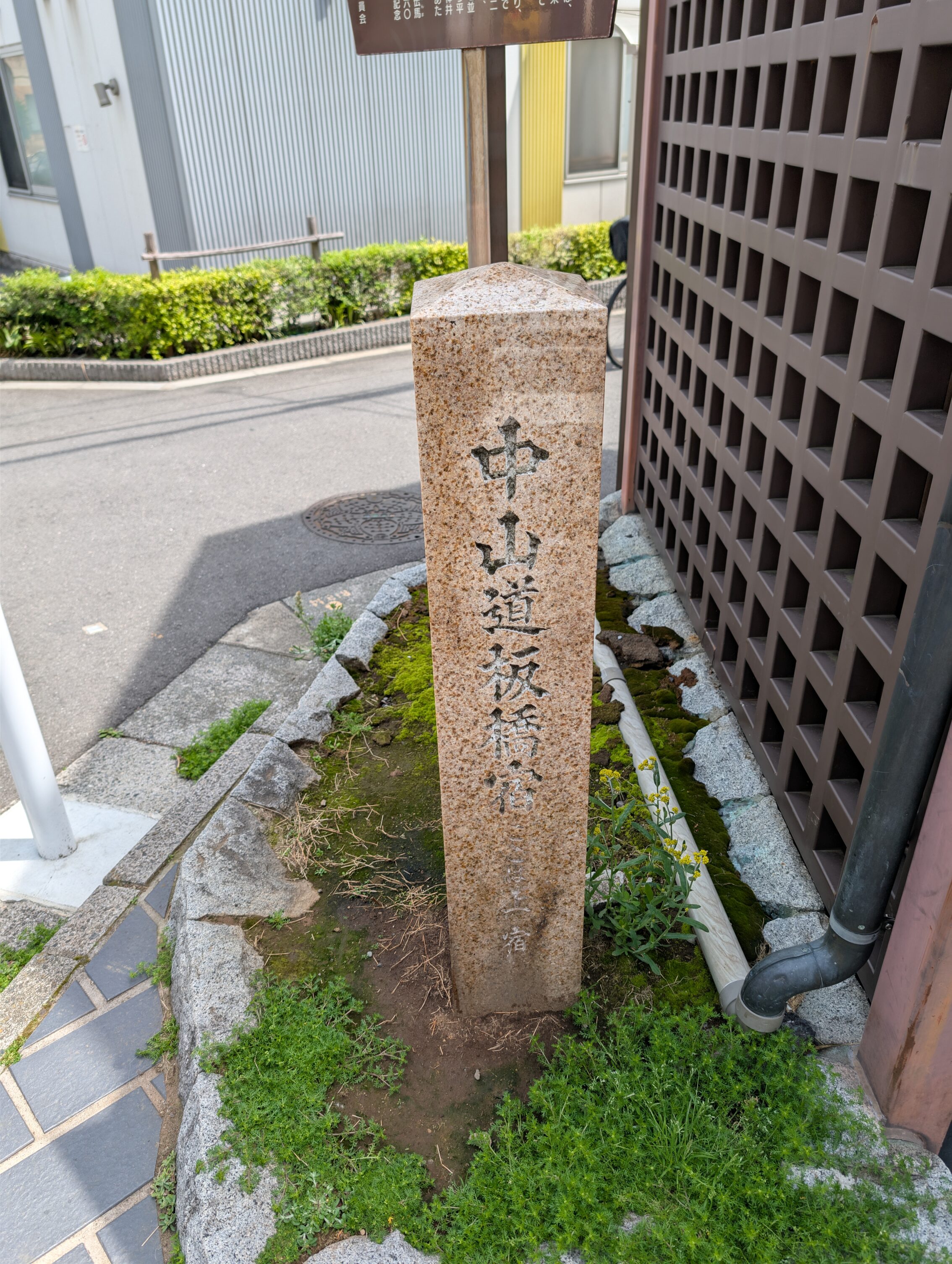
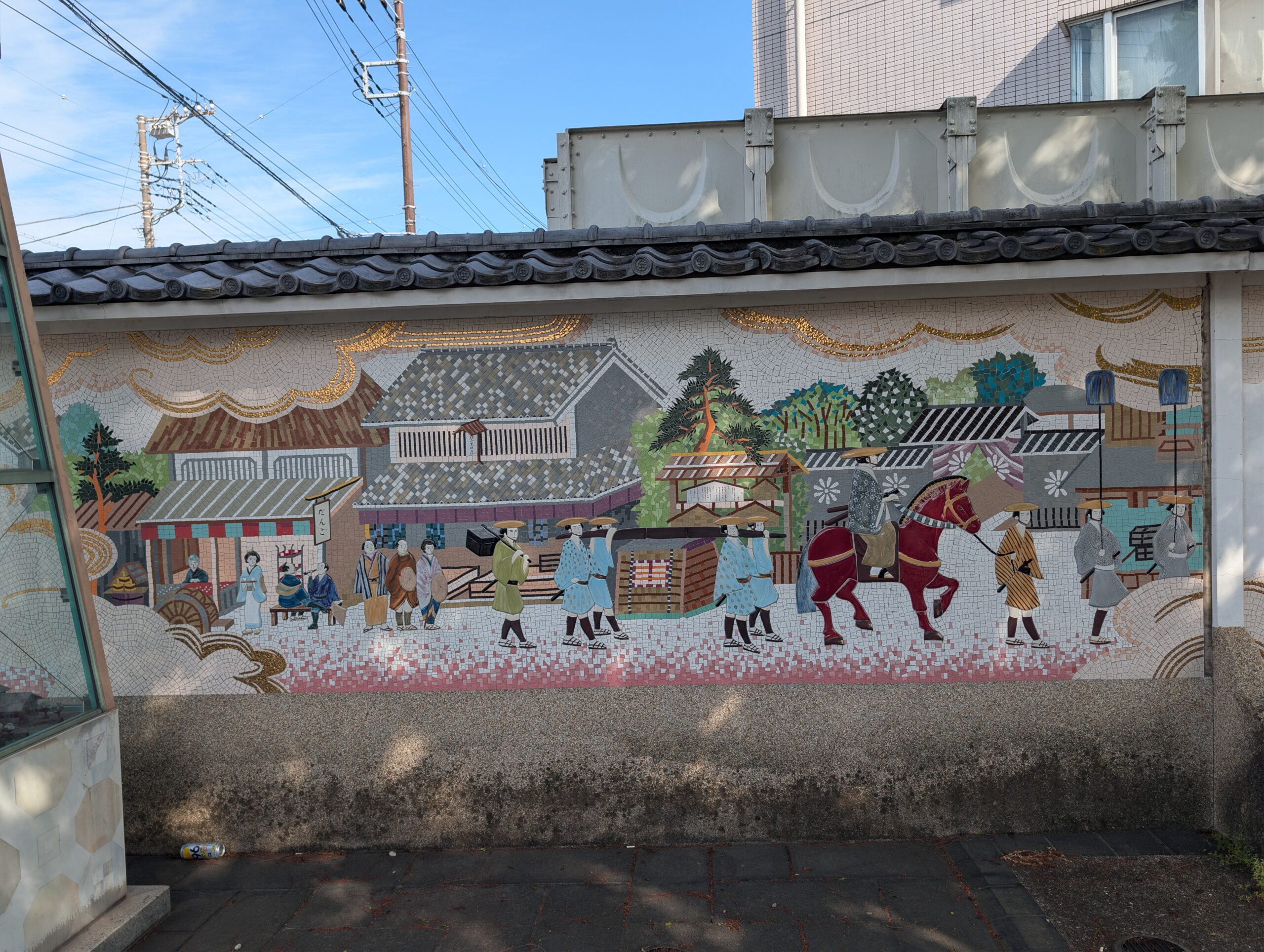
The end of this stage is the Itabashi-shuku. This post station used to consist of three small hamlets, Hirao-shuku, Naka-shuku, and Kami-shuku, but as they grew they merged into one single place. Today the post town is all but gone. With that I mean that of course Itabashi is a huge place today, but there are no remnants left of the original buildings from the Edo period. The post town is remembered today in the city with a stone marker and an information sign.
The next stage on the hike is to Warabi-shuku.
Leave a Reply