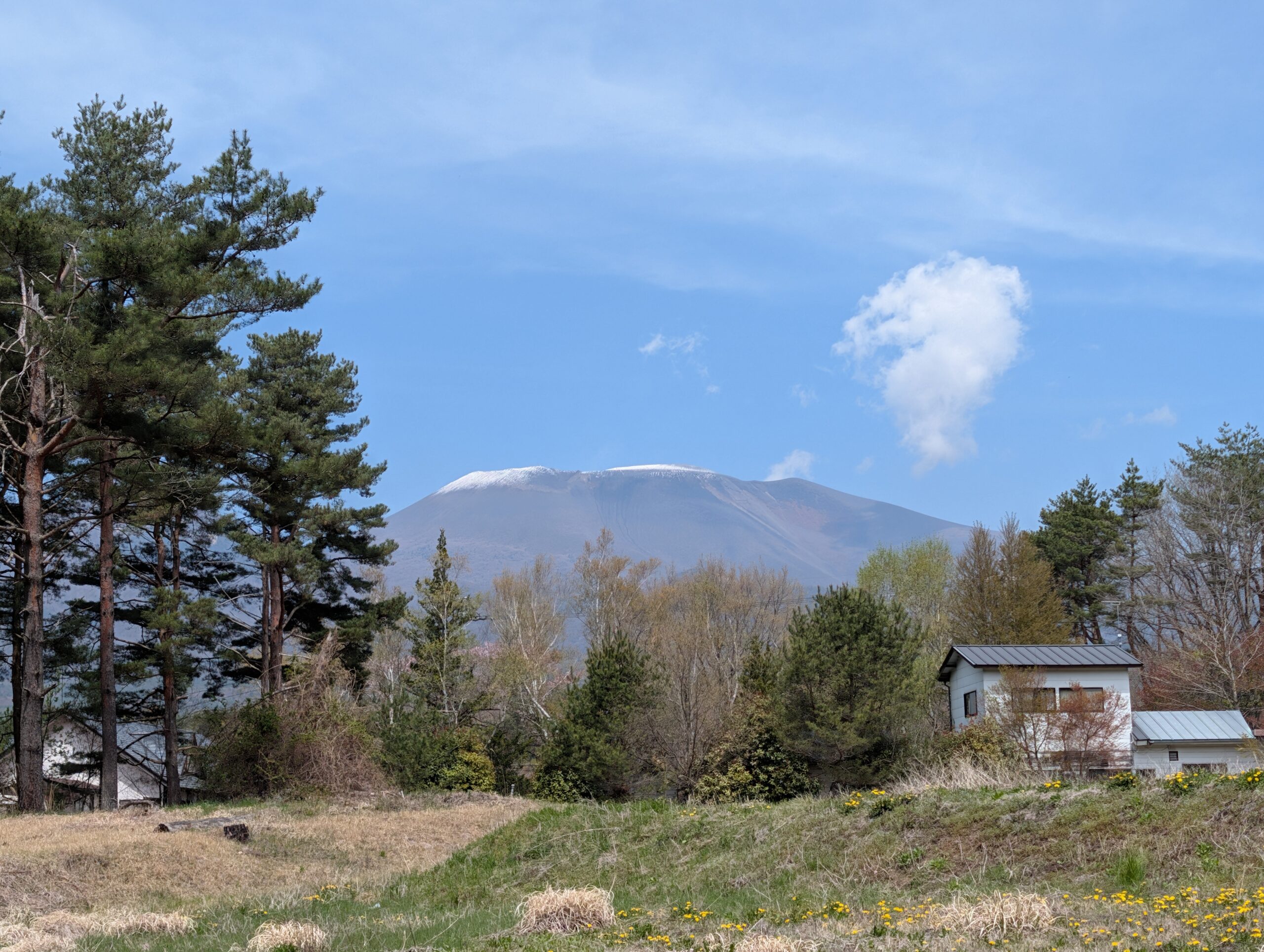
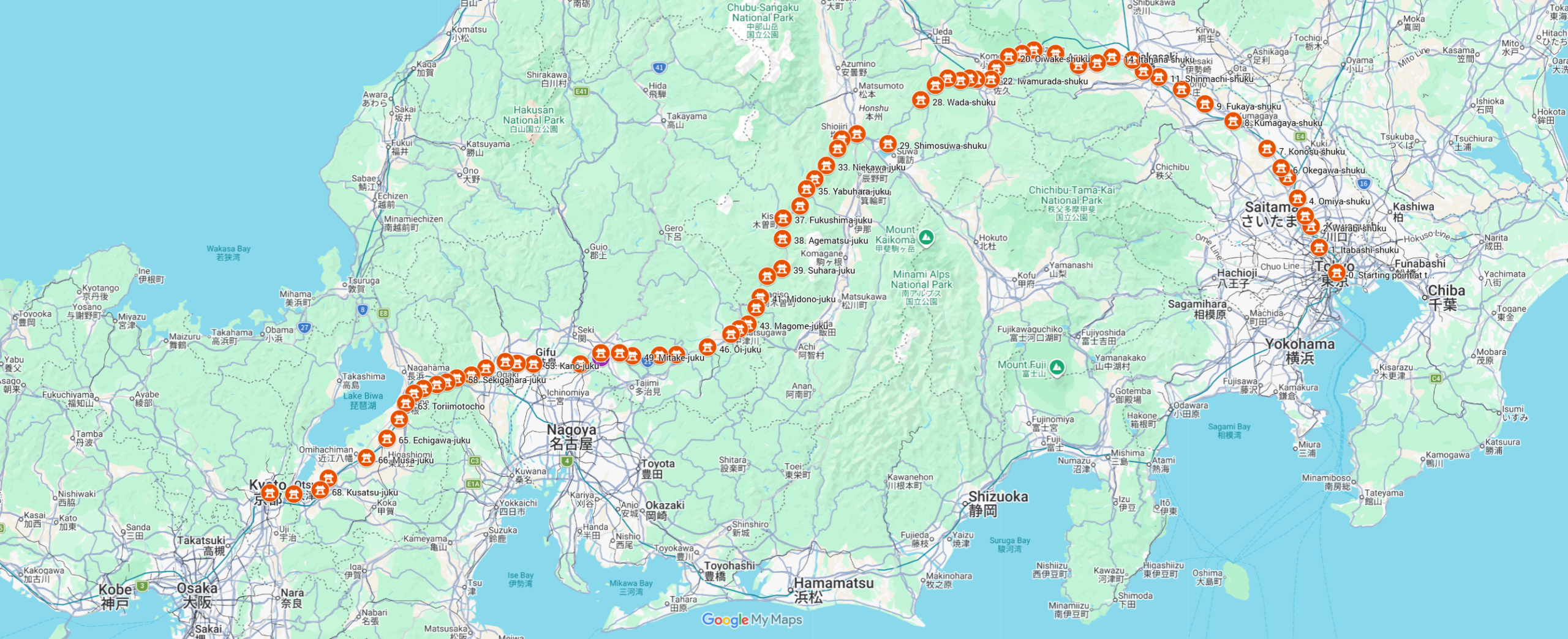
Today was a series of shorter legs combined to a longer stretch. Starting out in Karuizawa-shuku, which is sort of a vacation spot for rich people nowadays, the path led me through Kutsukake-shuku, and then onwards to Oiwake-shuku, Otai-shuku, and finally Iwamurada-shuku. This is the start of the so called Higashi Shinshu Nakasendō which is the passage between the two most difficult passes, the Usui and the Wada. I wrote about the Usui pass yesterday, and I will climb the Wada pass in a couple of days. This part of the Nakasendō crosses the Seku basin, which is a plains surrounded by three mountain ranges. The Asama mountain range is to the north, with the eponymous volcano as the ever present centerpiece. To the west and south is the Chichibu mountain range which is also called the Kantō mountains as they border the Kantō plains, and finally to the west is the Yatsugatake mountains. The Wada pass is in this last mountain range. So basically there are mountains in all directions.
A lot can be said about Karuizawa, but it is a pretty weird town today. After the Edo period came to a close most of the post towns started to decline. Karuizawa however, caught the eye of a Canadian missionary, Alexander Croft Shaw, who saw the potential of the excellent climate – much cooler during the Summer than Tokyo, and the stunningly beautiful surroundings. His work attracted a lot of Europeans, and the influx of among others English and German people is still apparent in the architecture of the town with timbered framed houses mixed with art deco buildings etc. Karuizawa is still an expensive resort, and has very little if anything left from the Edo period.
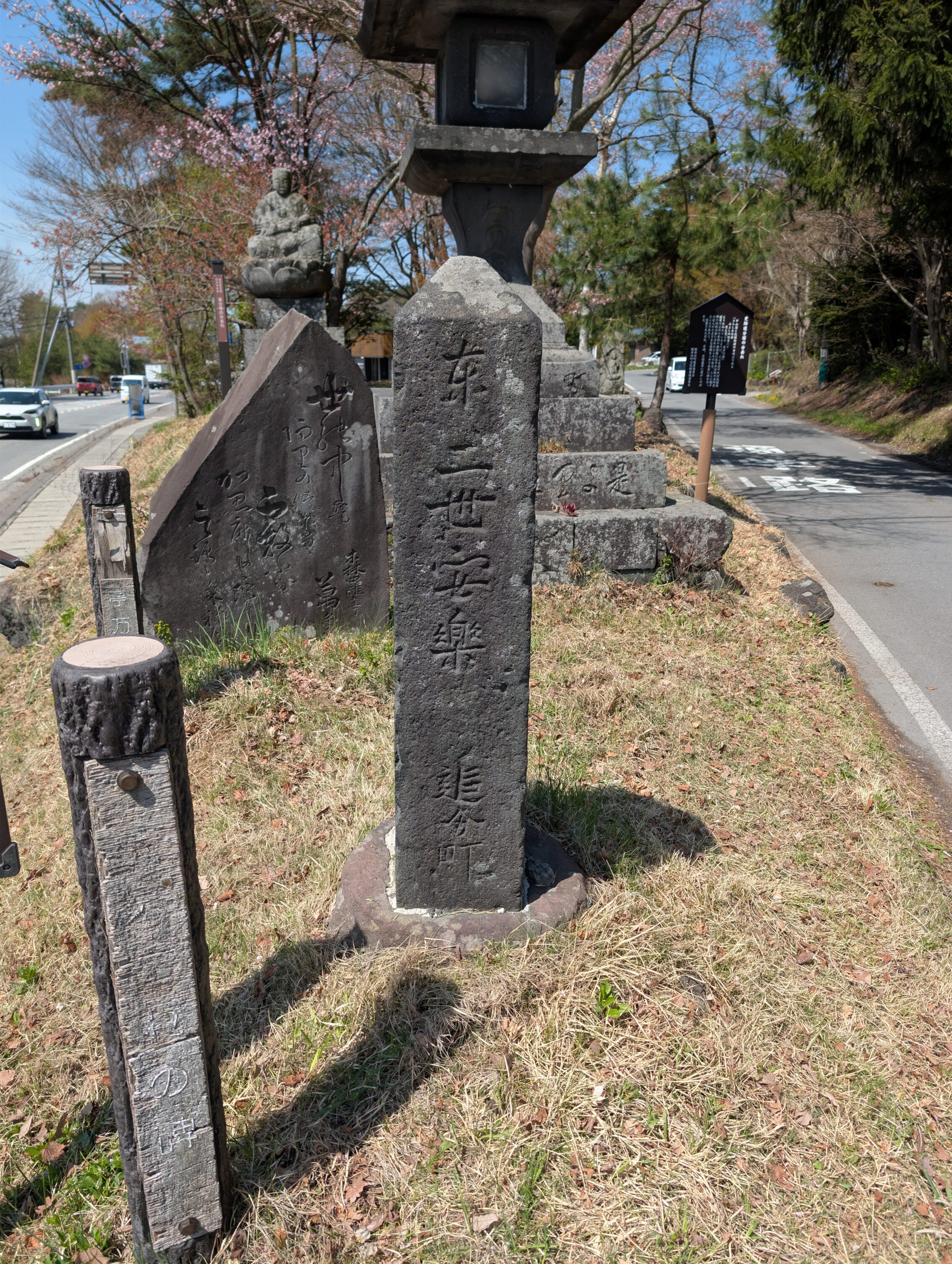
Kutsukake-shuku is today a part of Karuizawa, and while the houses here are more Japanese in style, devastating fires, as late as the 1950s have obliterated any Edo period traces. In Oiwake-shuku things are somewhat different, however. The main street of the old post town is lined with old houses still in excellent shape. The town also has a museum dedicated to this old crossroad, just at the eastern entrance.. Oiwake means where two roads meet, and this is where the Hokkoku Kaidō, one of the secondary roads of the Edo period split off from the Nakasendō.
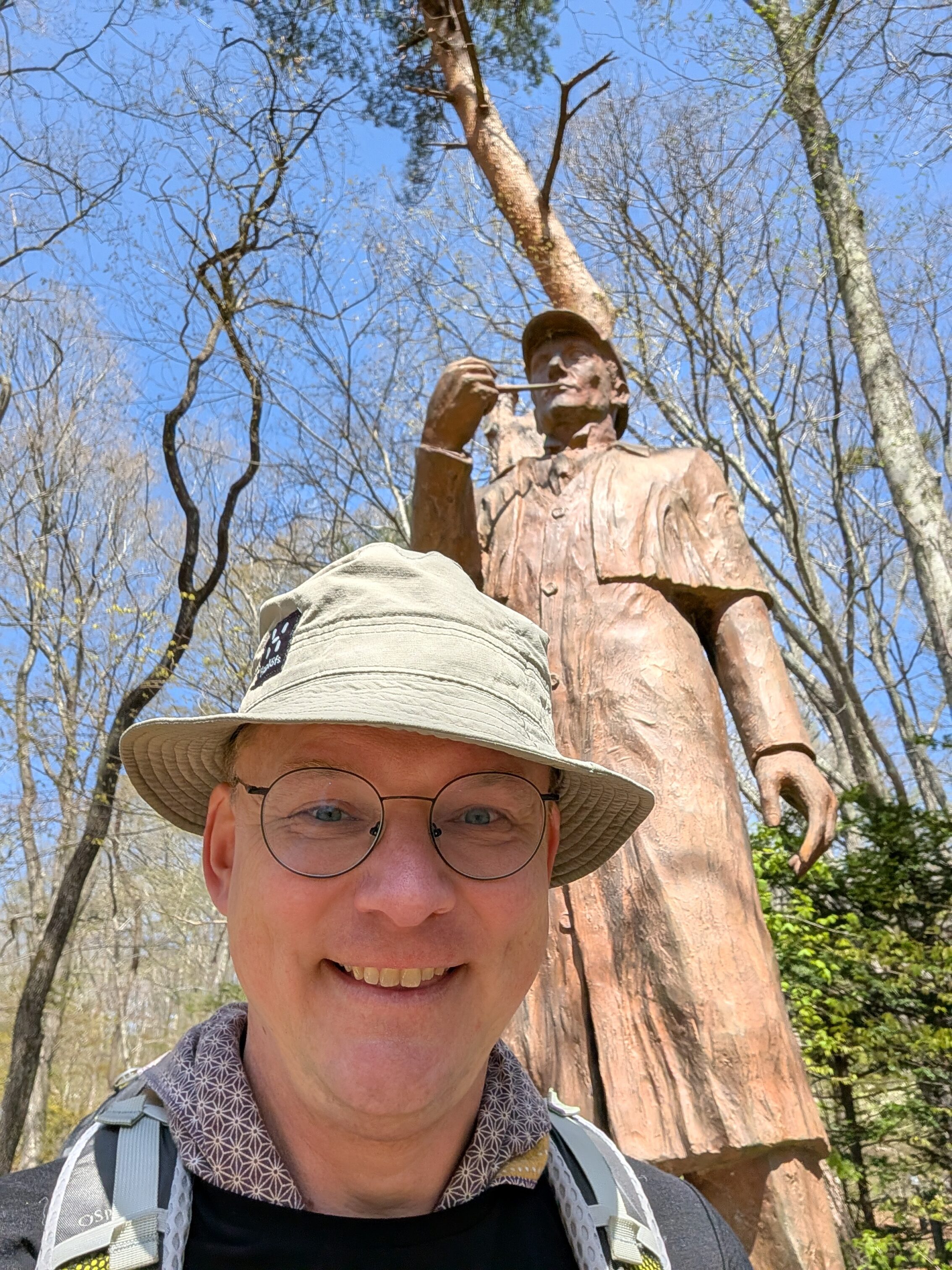
There is also a life-size statue of Sherlock holmes in Oiwake. Because why not? Or rather, the reason for this is pretty sound. The person who first translated all the stories of great detective to Japanese, and helped spread his popularity in Japan, lived and worked in Oiwake at the end of his life, and the Japanese Sherlock Holmes Society decided to honour him in 1988 with this statue.
A couple of hundred metres after leaving the Oiwake-shuku is the Nakasendō 69 Stations museum. This museum is dedicated to the history of the Nakasendō as a whole, and in particular to the development of all the 69 post stations. In the museum garden you can walk the whole of the Nakasendō through a meandering path with pictures of the various places you will encounter. Inside the museum is a wealth of material about the post stations, and the woodcuts by Eisen and Hiroshige that depict each and every one of the towns.
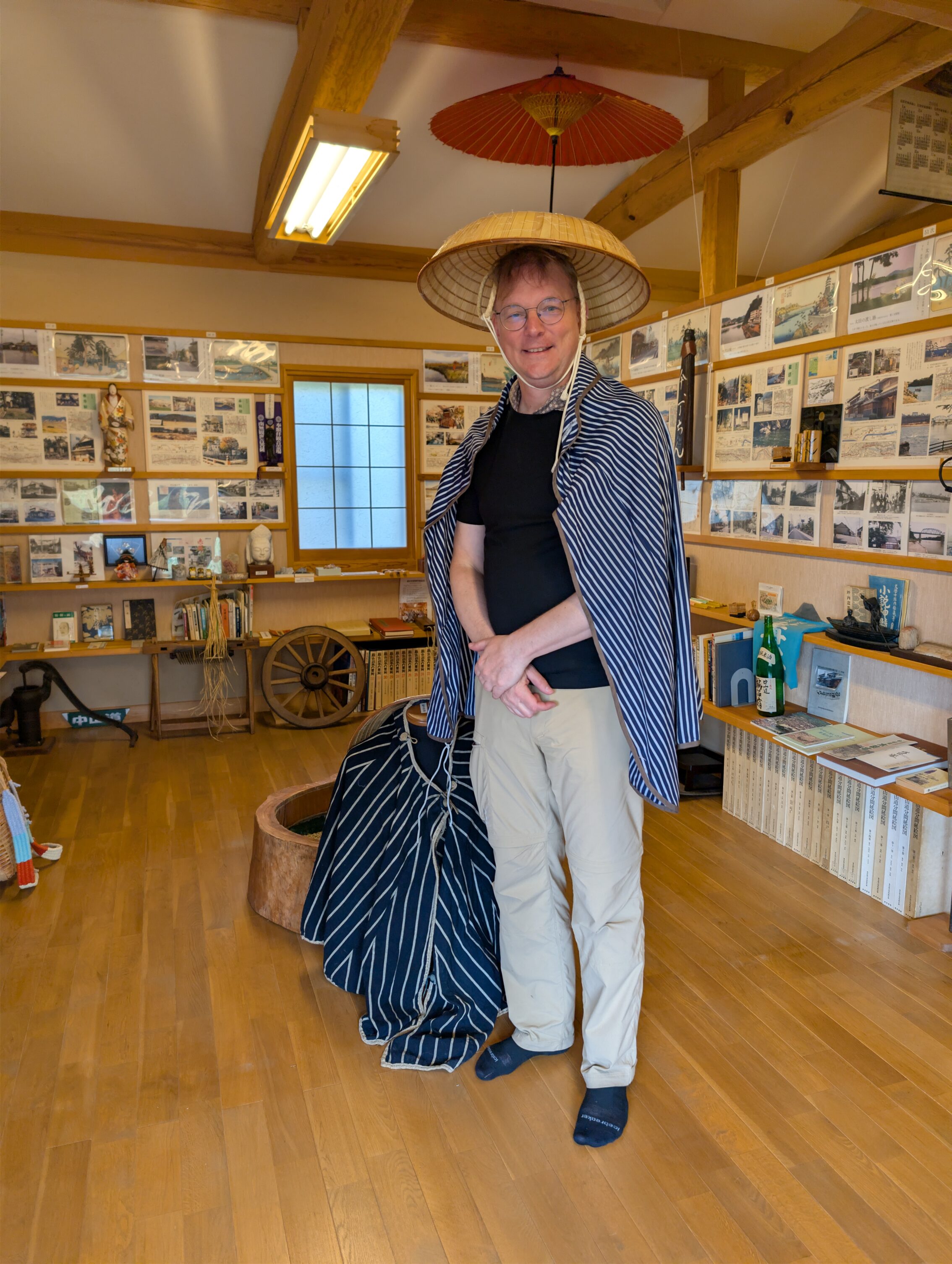
The director of the museum was kind enough to give me a guided tour, lasting about an hour. He didn’t speak any English, and I don’t know any Japanese, but we had a great time anyway!
The rest of the way towards Iwamurada-juku was characterised by mostly two things. One, it was downhill almost all of the way, and while it had nothing on the slopes of the Usui pass, I was quite happy not to be hiking in the other direction. Second, the path mostly followed smaller roads with very little room for a hiker. It might seem like a stupid thing, but losing the hiking rythm over and over again when stepping off the road to make sure you’re not in the way of the cars makes for very tiring hiking.
Otai-shuku has a lot of very well preserved houses, perhaps even more so than Oiwake, but they all seem to be in private hands, and are not open to the public, and there’s no museum to help you out with information. Even the honjin is still intact and in fantastic shape. Iwamurada-shuku seems to be undergoing some form of resurgence. The area around the old post town has been a rather rundown place for many years, but a lot of the buildings have been renovated, and few have been torn down to make way for newer things. The Edo period houses however, were all lost a long time ago mostly because of fires.
Milestones along the way
The Miyanomae ichirizuka is long gone, and has no sign.
The Oiwake ichirizuka has both mounds still in place, even though the busy National Route 18 passes between them
The Miyota ichirizuka can’t be seen from the road, but if you spot the small sign and head in between a couple of houses, the western mound is still there!
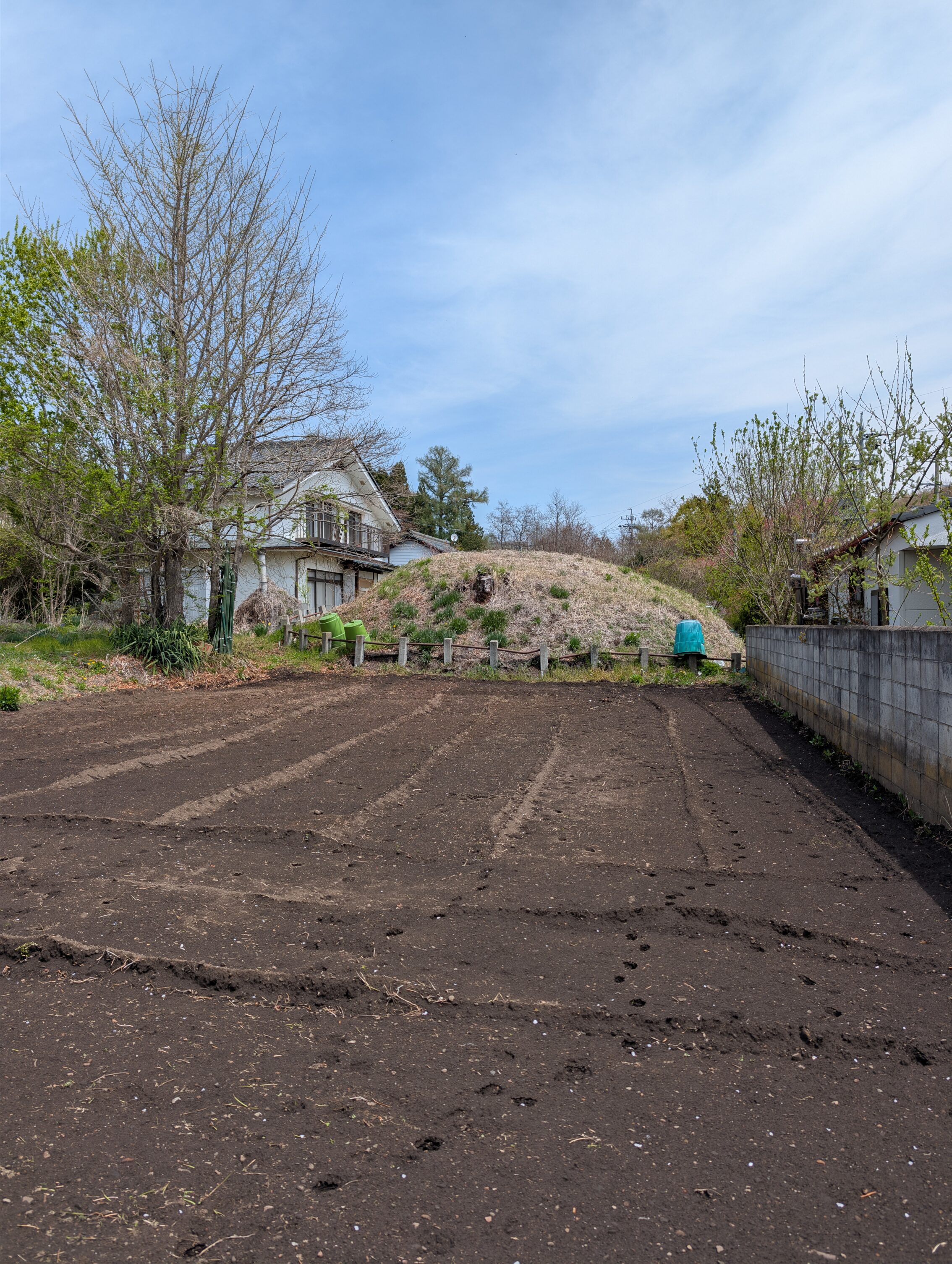
And finally, the Unawazawa ichirizuka has a very difficult to spot sign away from the road.
Total hiked today according to the map: 19.1 km.
Total hiked today according to fitness app: 21.8 km.
Leave a Reply