Kōsatsuba or seisatsu were message boards where government declamations, edicts, rulings and other kinds of official information could be posted. That could include new laws, information about what kinds of activities the government thought to be harmful to the state, and what kinds of punishments could be meted out, what rewards were offered to informants and so on. These information boards were present in all post stations, as well as in a lot of other towns and hamlets across Japan, at least from the beginning of the 18th century and onwards. In 1711, the shogunate introduced a revised criminal code that among other things included prohibitions against christianity. This prompted the government to mandate all post stations to having one of these kōsatsuba. The messages, the kōsatsu themselves, were written by hand on wooden signs that where hung and displayed under the roof of the kōsatsuba.
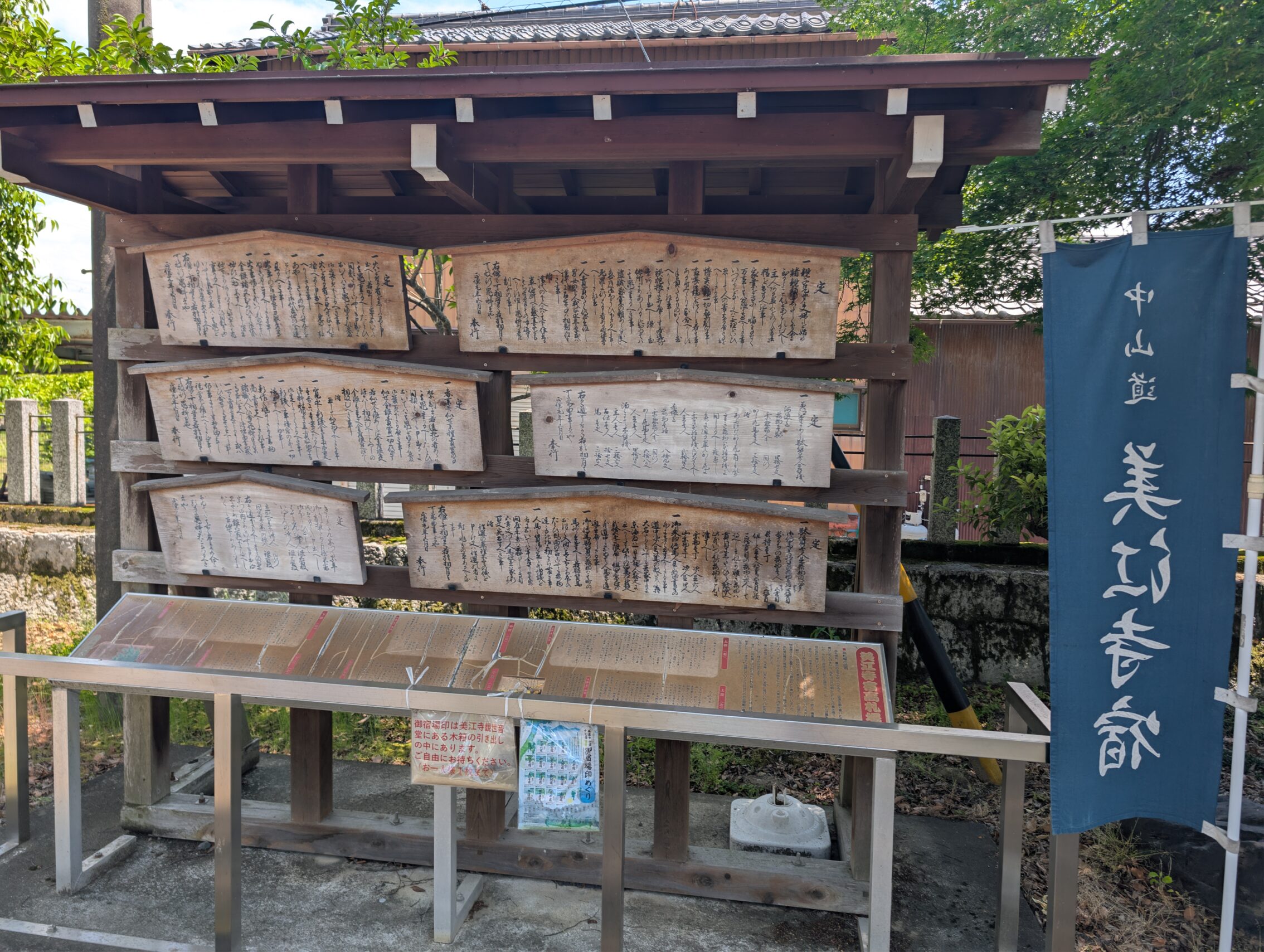
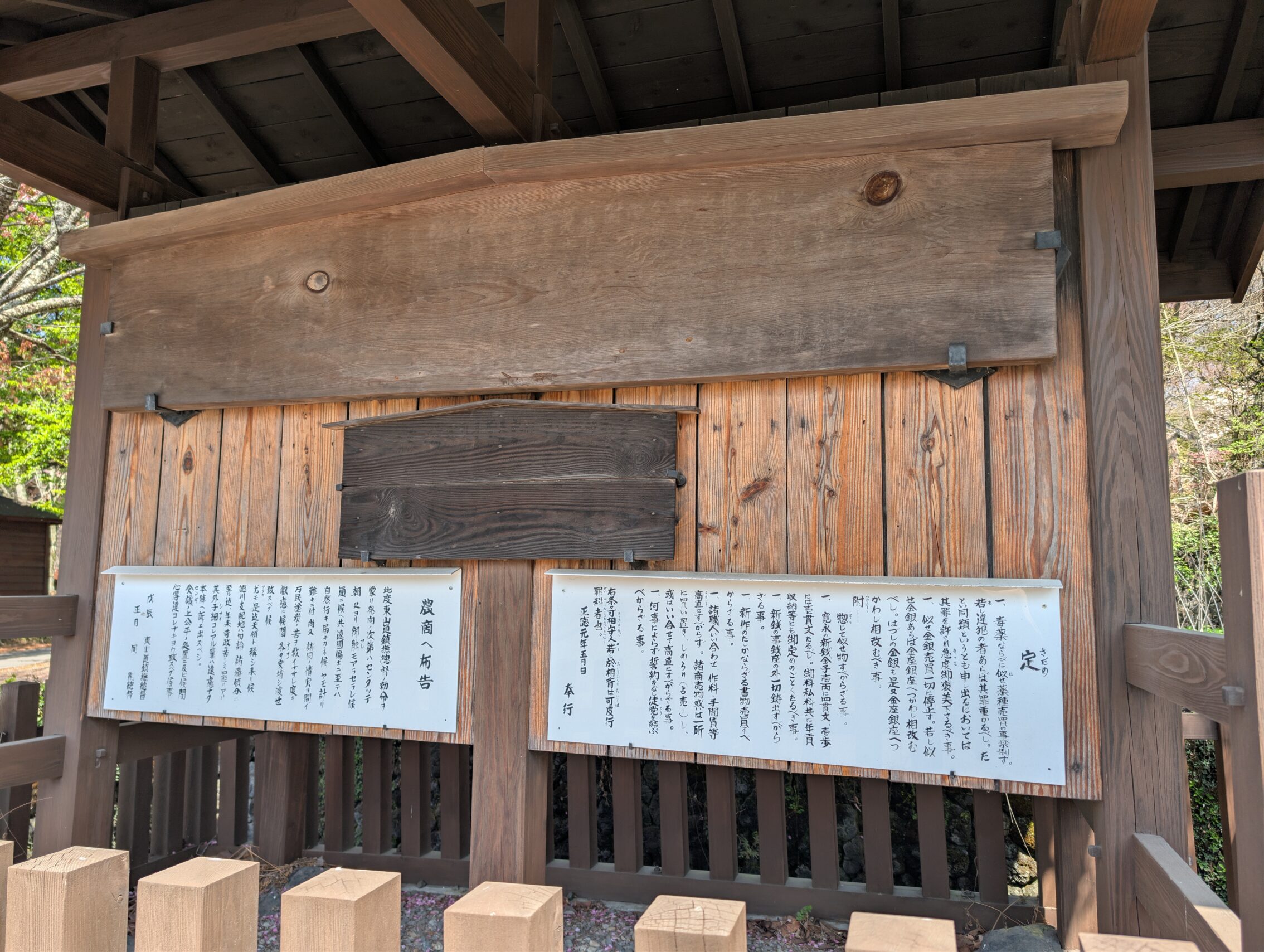
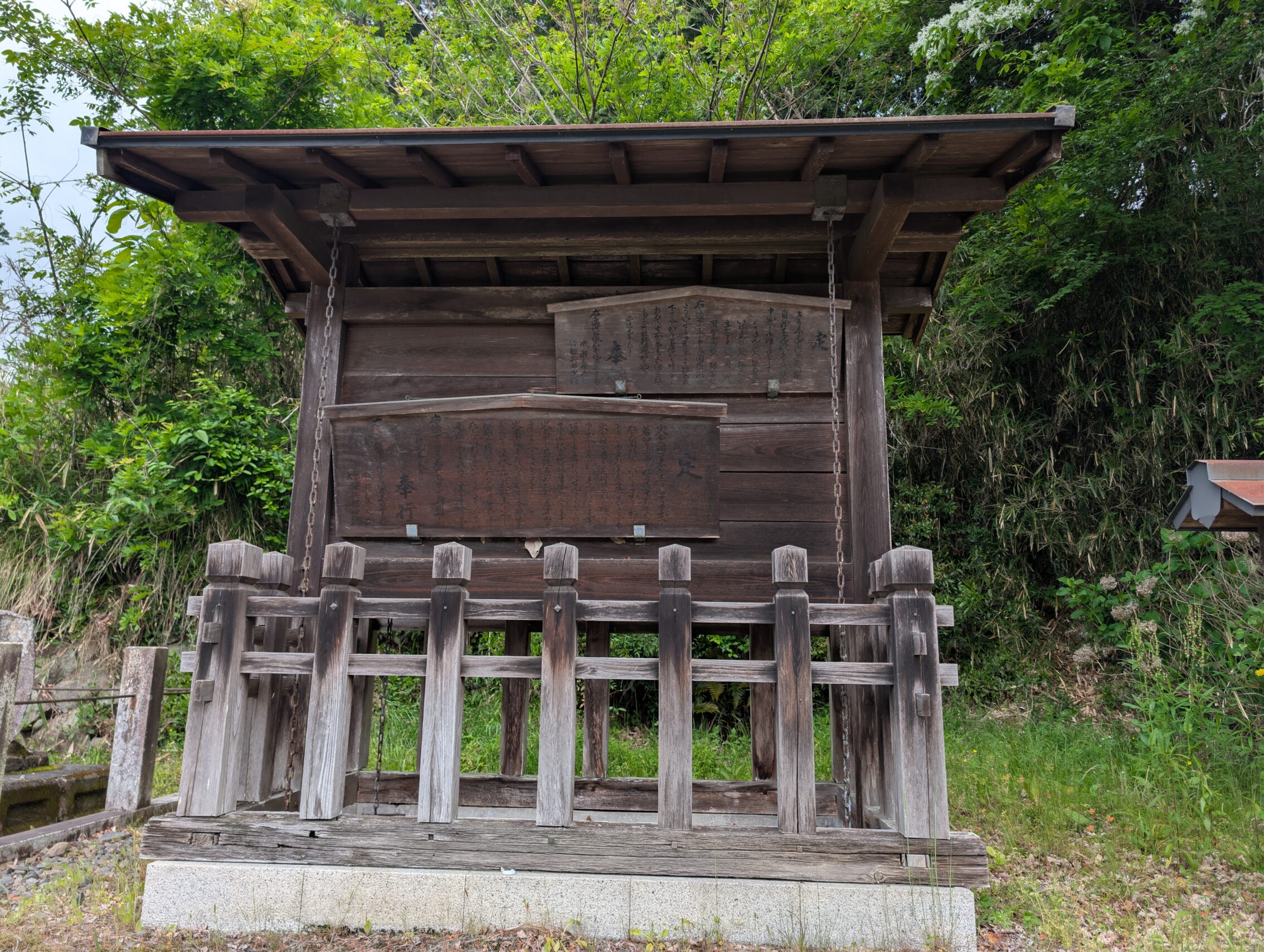
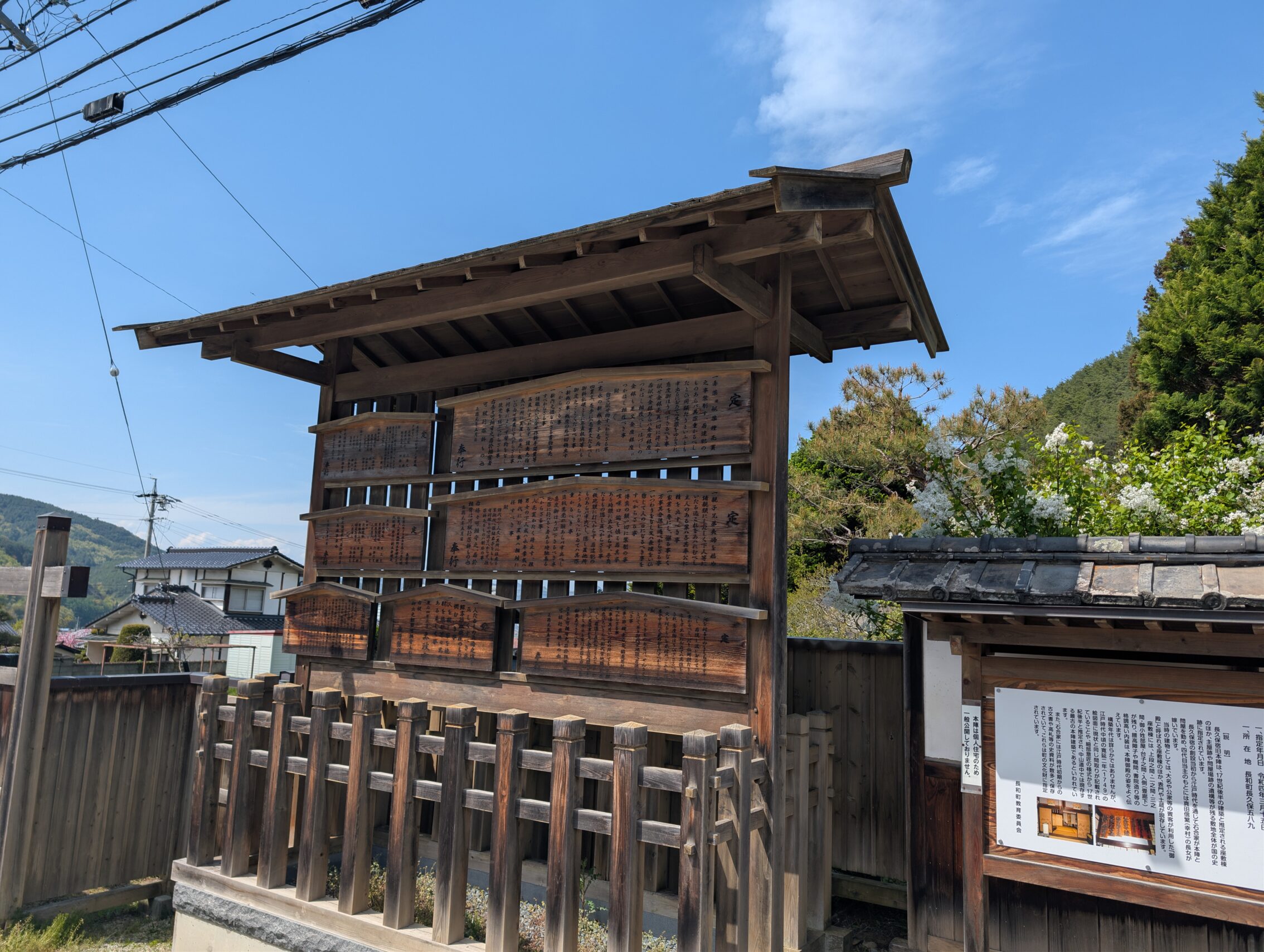
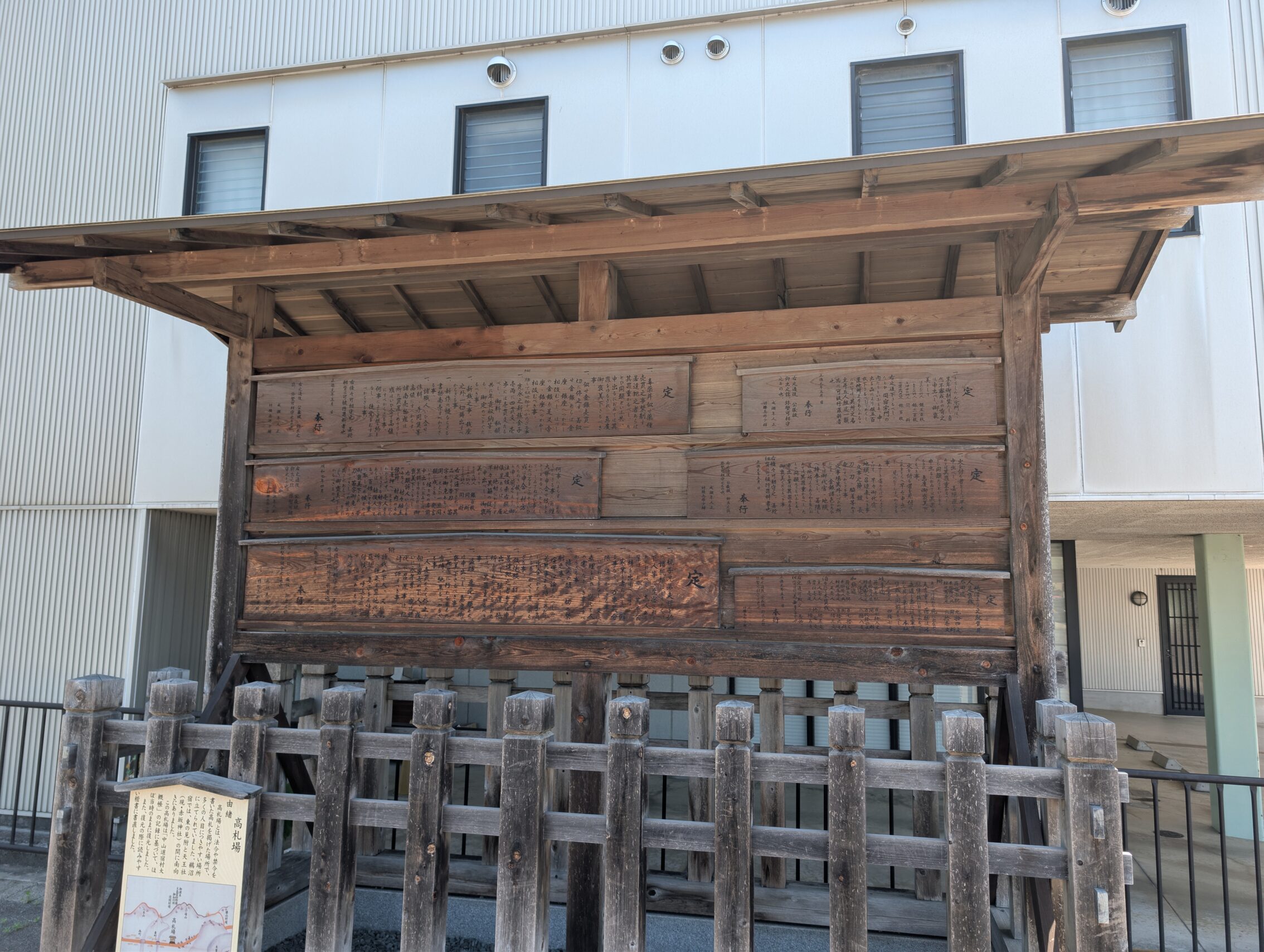
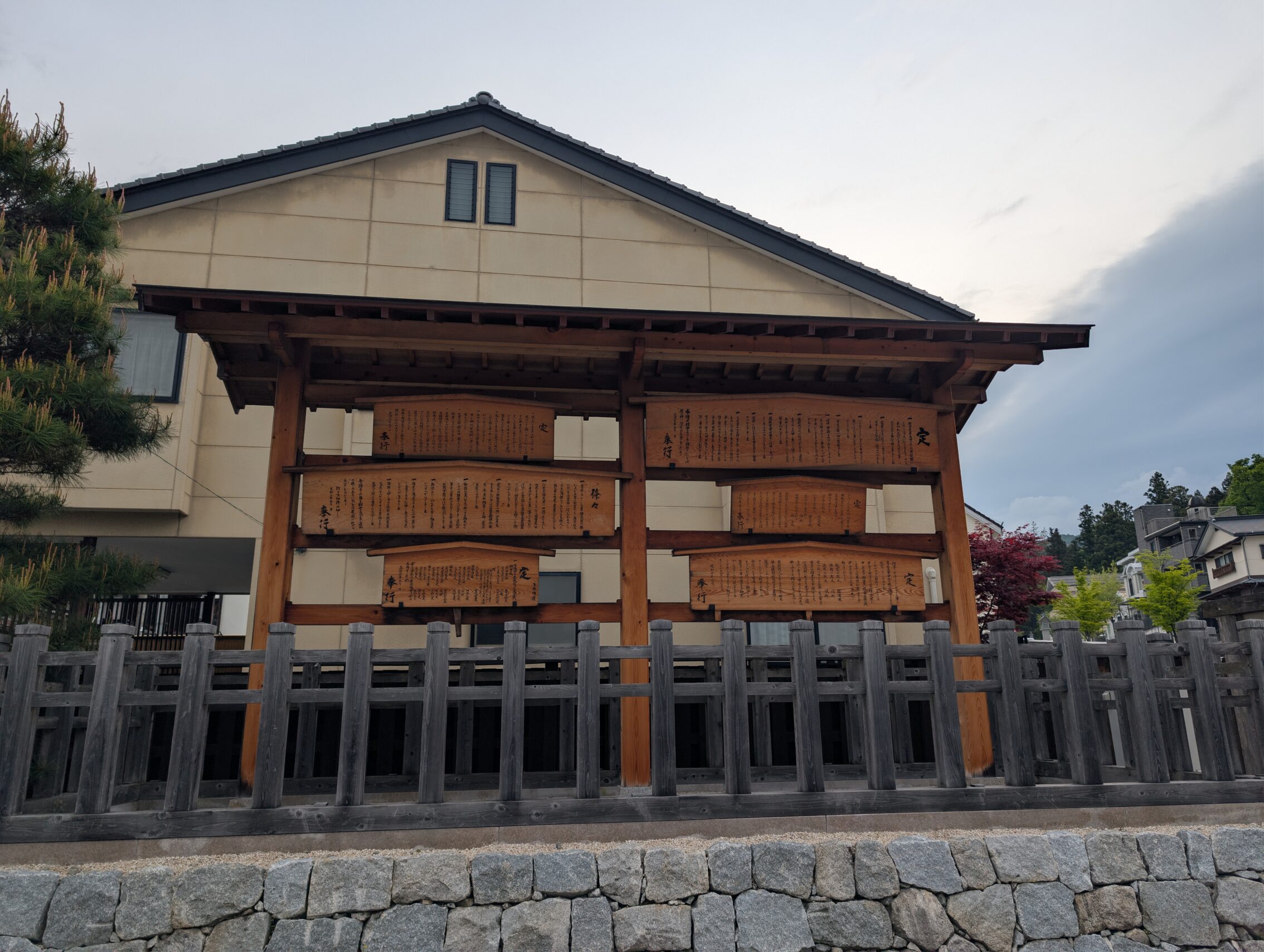
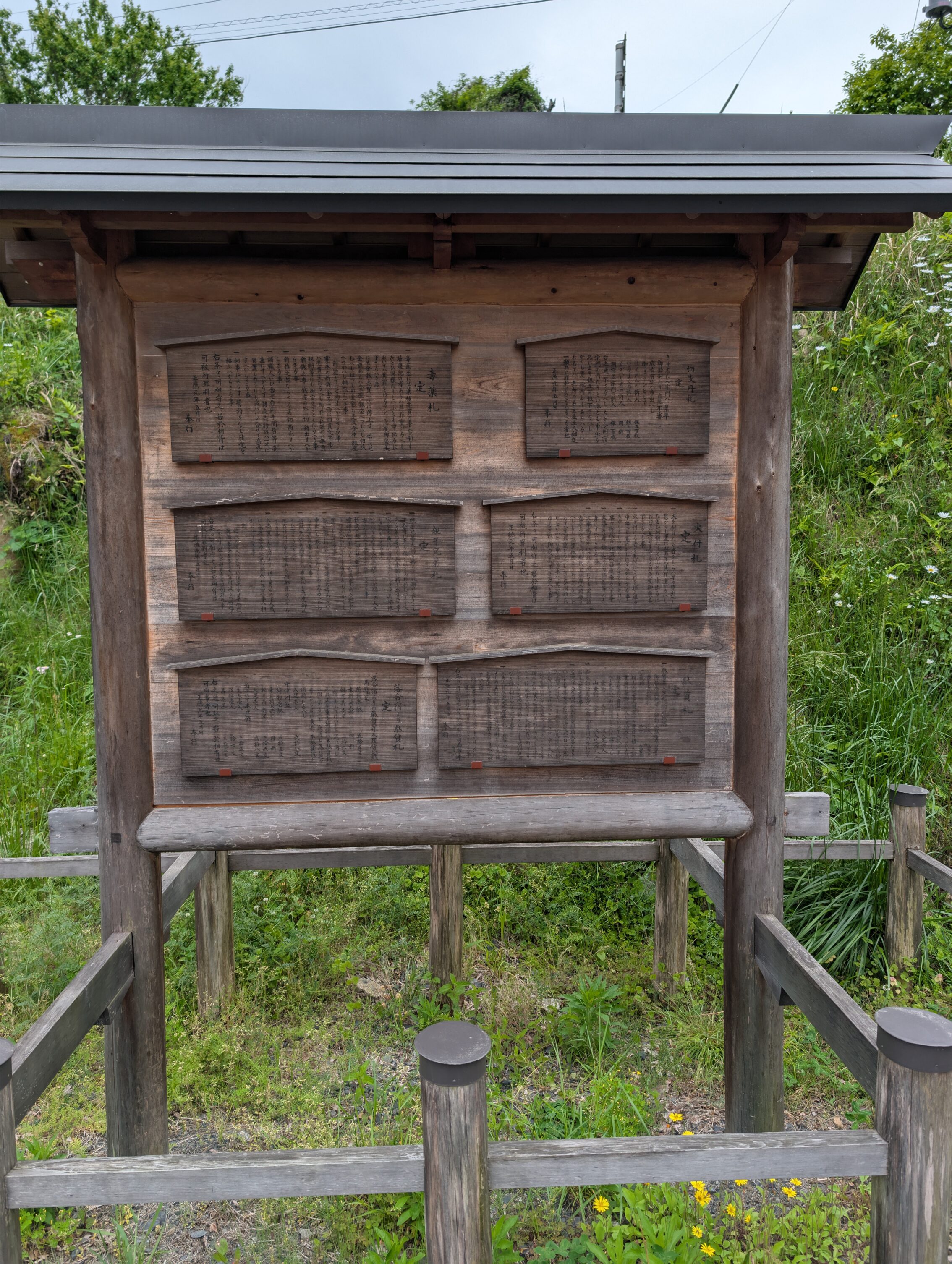
Most, if not all of these message boards were torn down, or left to the mercy of the elements as the system was abolished in the early Meiji era in the 1870s. Quite a few post towns along the Nakasendō have restored their kōsatsuba, or built a new one to showcase the history of their respective places.
The featured photo up above is a modern message board hanging on the restored chaya, tea house near the top of the Magome pass between Magome-juku and Tsumago-juku at the southern end of the Kiso valley.
Leave a Reply