
This blog isn’t meant to be about general hiking skills nor does it try and teach you how to be as good a hiker as possible. What constitutes good hiking practices varies considerably depending on the person speaking, and their preferences. With that being said, there are a few universal things about hiking that bears repeating regardless of who you are, or where you will be going.
The weather will turn bad
You will encounter bad weather when you are on the trail.
It might not be apparent what “bad” weather is in the first place, though, and that might vary considerably between different kinds of hikers. A good definition of bad weather for walking can be:
“Weather that prevents you from going forward, or weather that makes you miserable when you are out hiking.”
There are some kinds of weather which are bad, full stop, no questions. For instance, typhoons and hurricanes and extreme hail etc, which all can be utterly dangerous to be hiking in, but for the purpose of this rule you need to define what kind of weather or conditions that you think are problematic for you. They also have to be at least plausible to occur on your hike. When you’ve done that, you need to plan for it in your itinerary, and plan for it when you are packing your stuff.
For instance, if you are going to be hiking at a time when there are chances of thunderstorms or strong winds that may keep you inside, you should give more leeway in how much time you think you need, and what kind of rain gear you carry. Schedule for extra days, and maybe a slower walking pace overall. If you are going to hike in warm weather, you probably need to pack sunscreen and carry an extra bottle of water. And so on.
To minimize the impact of bad weather, take good care in thinking about what kind of weather you like to walk in, and plan the dates of your adventure accordingly. If you hate warm weather with sweltering heat, then maybe hiking in August in the Tokyo area isn’t the best choice. If you loathe days with heavy rains, you should probably stay away earlier in the summer too, when the rainy season occurs, and if you hate ice and snow, then February in the hilly areas in the interior of Japan isn’t going to be much fun.
With all that being said, if you trek long enough, (and the Nakasendō is easily a 25 to 35-day journey on foot depending on your willingness to walk long distances each day), you are bound to run into some pretty bad weather on some of the stages, at least a few times. Don’t plan for all sorts of weather, though. There’s for instance no need for snow shoes in the summer in Kyoto. That’s just silly. But you should plan to encounter some incessant raining and violent thunderstorms, and humid heat, as well as a scorching sun and so on.
So in summary, you will encounter weather that’s not perfect for your hiking, so pack accordingly and most importantly – be ready for it.
Something will break
When something breaks, it means that you can’t use the item in question, so this definition also includes losing them along the way, or forgetting to pack them in the first place.
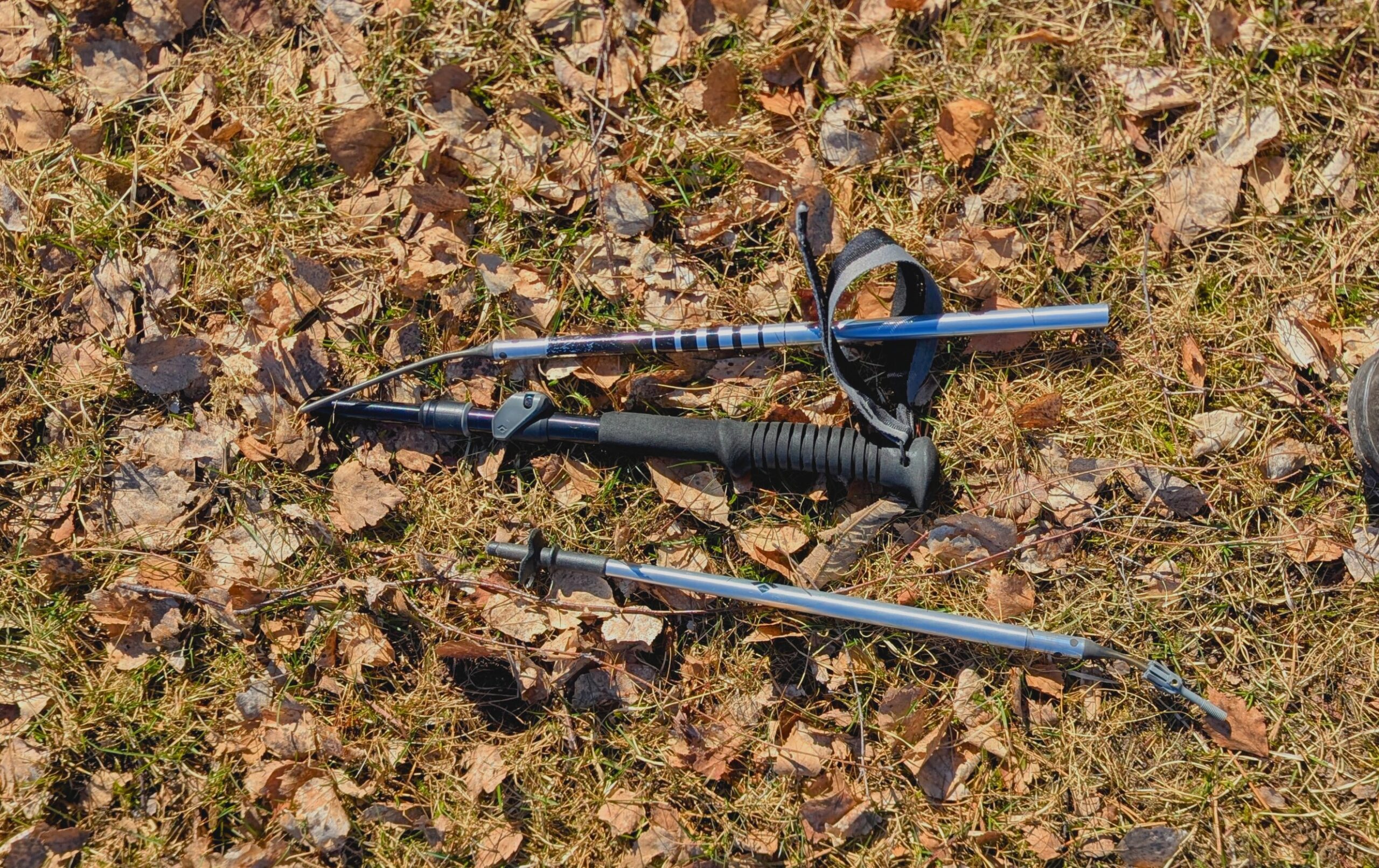
You have to be prepared that along your weeks-long hike the risks of something breaking is far larger than for everything to go smoothly and according to plan. The thing that breaks might be an easy thing to replace, such as a hole in a sock, or torn-off shoelaces.

It might also be something more serious such as if one of the shoulder straps on your backpack gets torn off, or if you sprain an ankle badly on a steep and rocky slope.
Yes, ‘something breaking’ includes yourself too.
Something breaking shouldn’t be a catastrophe if you’re mentally prepared for it. Go through your things and make a list of what you have to replace immediately if it breaks, and what you can do without for a couple of days. A hole in a sock might be a big issue if you only have one pair with you, as anything that chafes is a prime cause of blisters, but it’s just a minor inconvenience if you have more socks than that.
Have relevant emergency numbers readily available in your phone.
Be prepared for that things can and will break, and think ahead of what you should do when it does.
You will take a wrong turn
“I always use my GPS-device” and “I follow online maps slavishly” and “I carry detailed printed maps of every stage and I have a compass” are all good methods if they work for you, but it is imperative to remember that regardless of your maps, your own senses, and your devices, chances are that you’ll take a wrong turn or two, or miss an exit anyway at some point along the way. The map might be incorrect. The GPS might be lagging. You might have gotten confused regardless of your innate senses. Signs might be missing or even wrong.
Be prepared for what to do when you get off the trail by mistake and maybe even feel lost. What phone numbers can you call? Do you know how to tell someone that you’re lost without using English? Are you good at backtracking to the last known location?
Most often it’s no bigger deal than that you’ll arrive half an hour later to your ryokan for the night, but there is a risk of getting hours and hours off the trail. Do you know how to check bus time tables? Do you have extra cash for a taxi? Do you know how to call a taxi? Is it even possible to get that kind of help where you are hiking? Do you have the physical and mental energy to walk all those extra kilometres? It’s much more draining on the psyche to backtrack than it is to walk the correct route.
Although this might not be that much of an issue when hiking along the Nakasendō as you are never too far from some form of civilisation there, but getting lost in a wilderness is truly *dangerous*.
Prepare yourself mentally for not always knowing where you are.
Leave a Reply