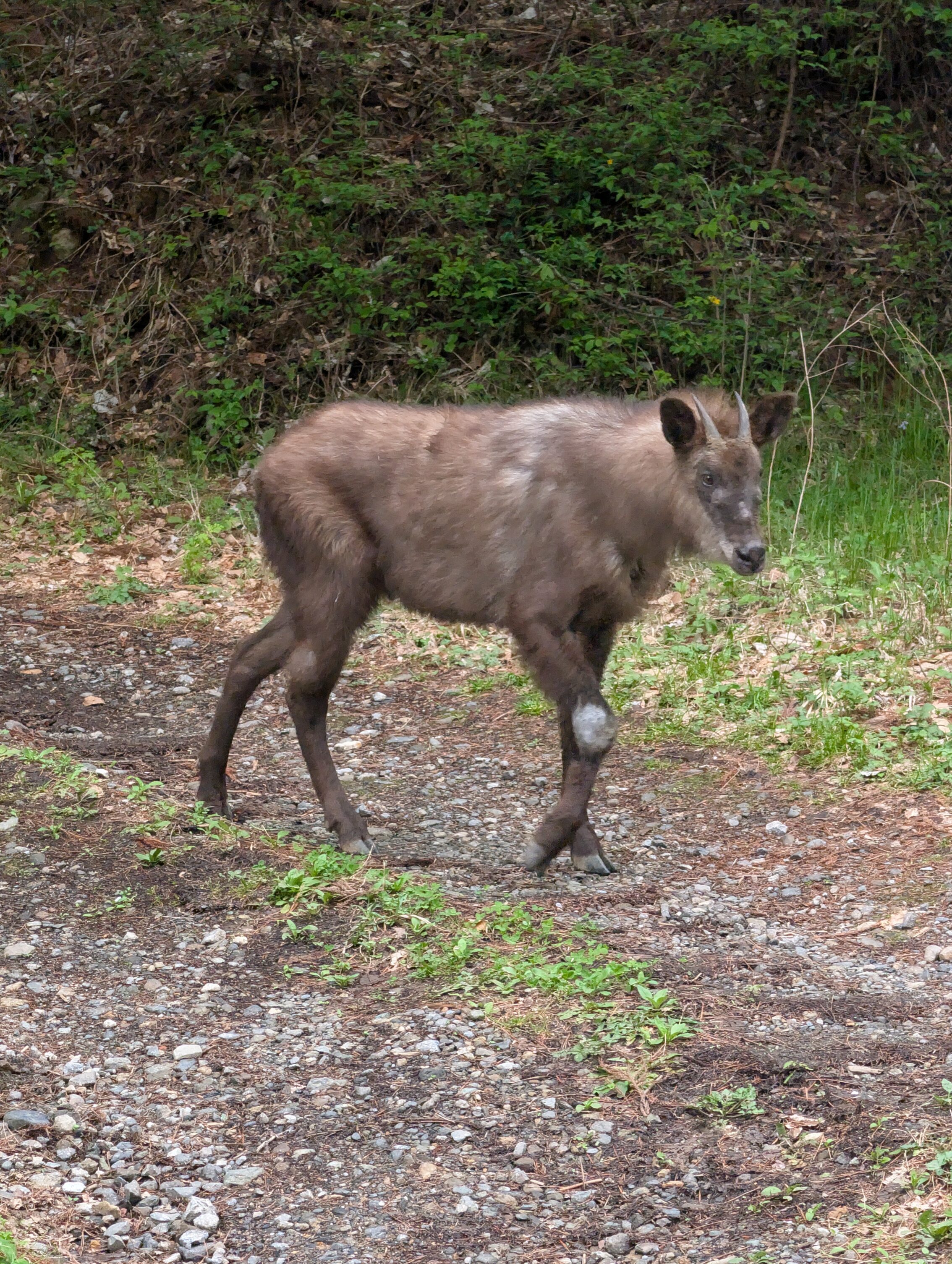
The hike today followed the Early Nakasendō instead of the “normal old Nakasendō”. There will be a post about that as well as usual, also explaining what the Early Nakasendō actually is. But these wild stretches of mountain roads I hiked on today presented som fantastic wildlife. First out was an encounter with a Japanese Serow. These large goat-antelopes (!) mostly roam the central and northern parts of the main island. The species has gone from near extinction around the middle of the last century to being completely restored in the wilds.
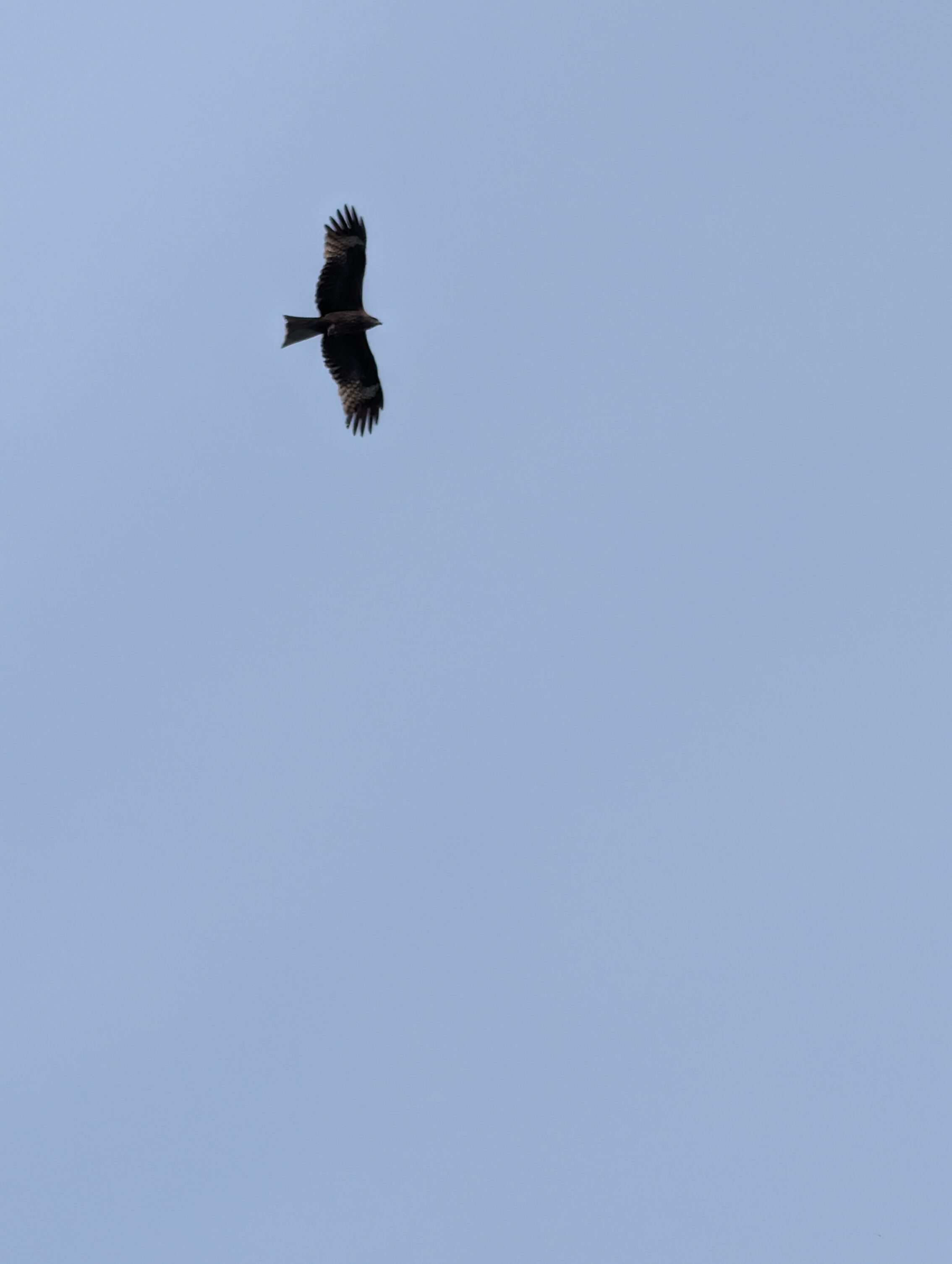
There were birds too! I’ve seen several black kites along my hiking, but I finally had my camera ready for this one.
I also finally saw a glimpse of the Japanese Bush Warbler. If you’ve been out in nature in Japan you have probably heard this very common bird, and it’s characteristic song. It is however very grey and discreet, and not easy to spot at all.
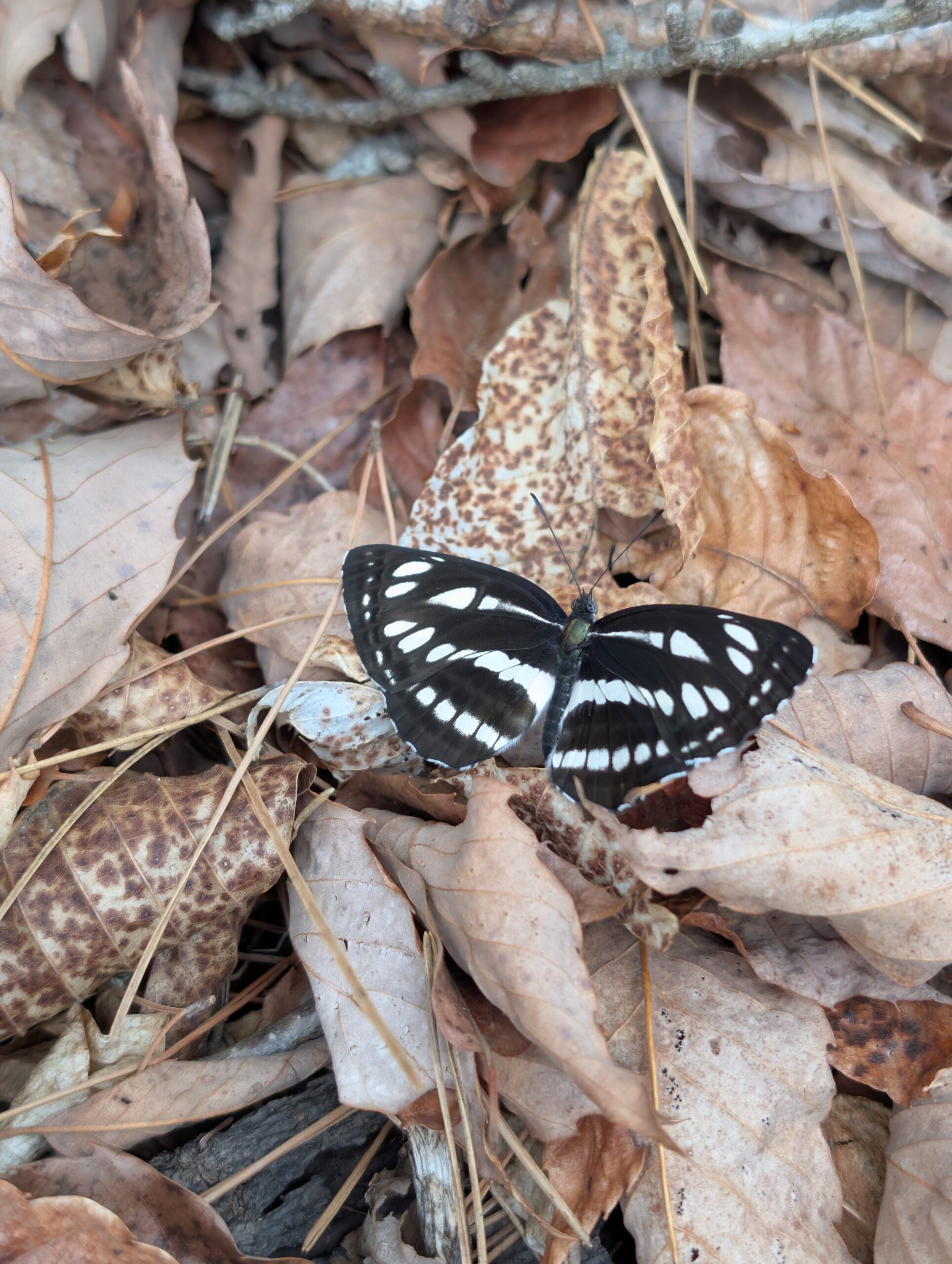
And also, butterflies! Well, at least one that stayed still long enough for me take a picture, and this is the featured photo at the top. This is a common bluebottle, or three-striped butterfly. In English it’s only known by its Latin name, Neptis Sappho.
Finally, I have the coolest thing to show you! A Tiger Keelback snake, (ヤマカガシ Yamakagashi)! These snakes are one of the few species known to be both poisonous and venomous! They get their poison from the poisonous frogs they eat, and they store that poison in glands from where they can release it if necessary as a deterrant. This process of stealing other animals’ poisons and then in turn use them against others is called kleptotoxicism. It is very rare indeed in vertebrate creatures, and the Tiger Keelback may be the only species of snake that does this.
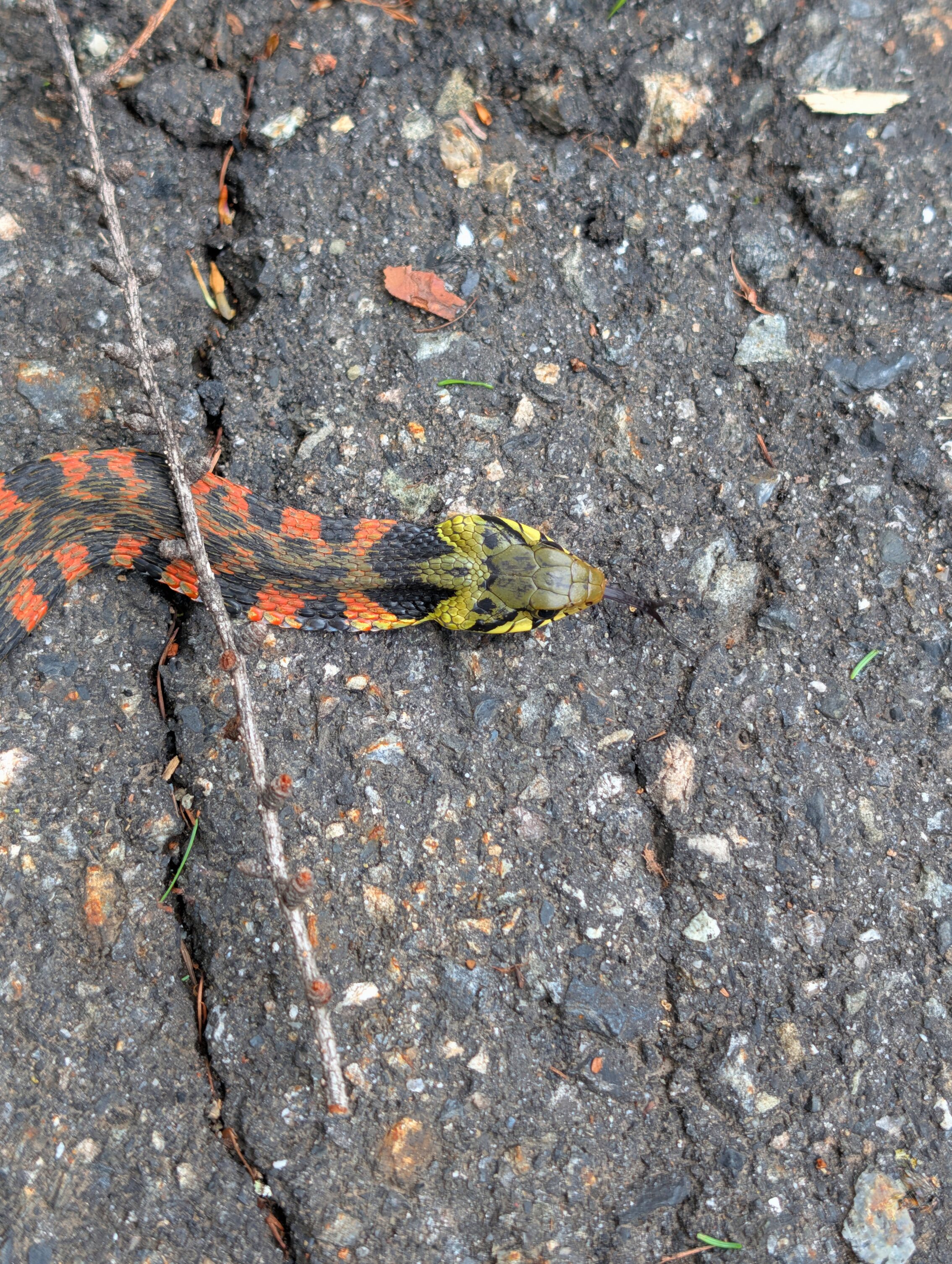
The Tiger Keelback usually tries to avoid larger predators by flattening themselves on the ground and hiding, which is exactly what this one did. But this was the middle of a road, even if it was a rather untrafficked one. And that is a spectacularly bad place to be completely still in, so I tried to shoo it off into the grass instead. It took a while for it to turn around and slither off, but it finally did! And no, I did NOT touch it!
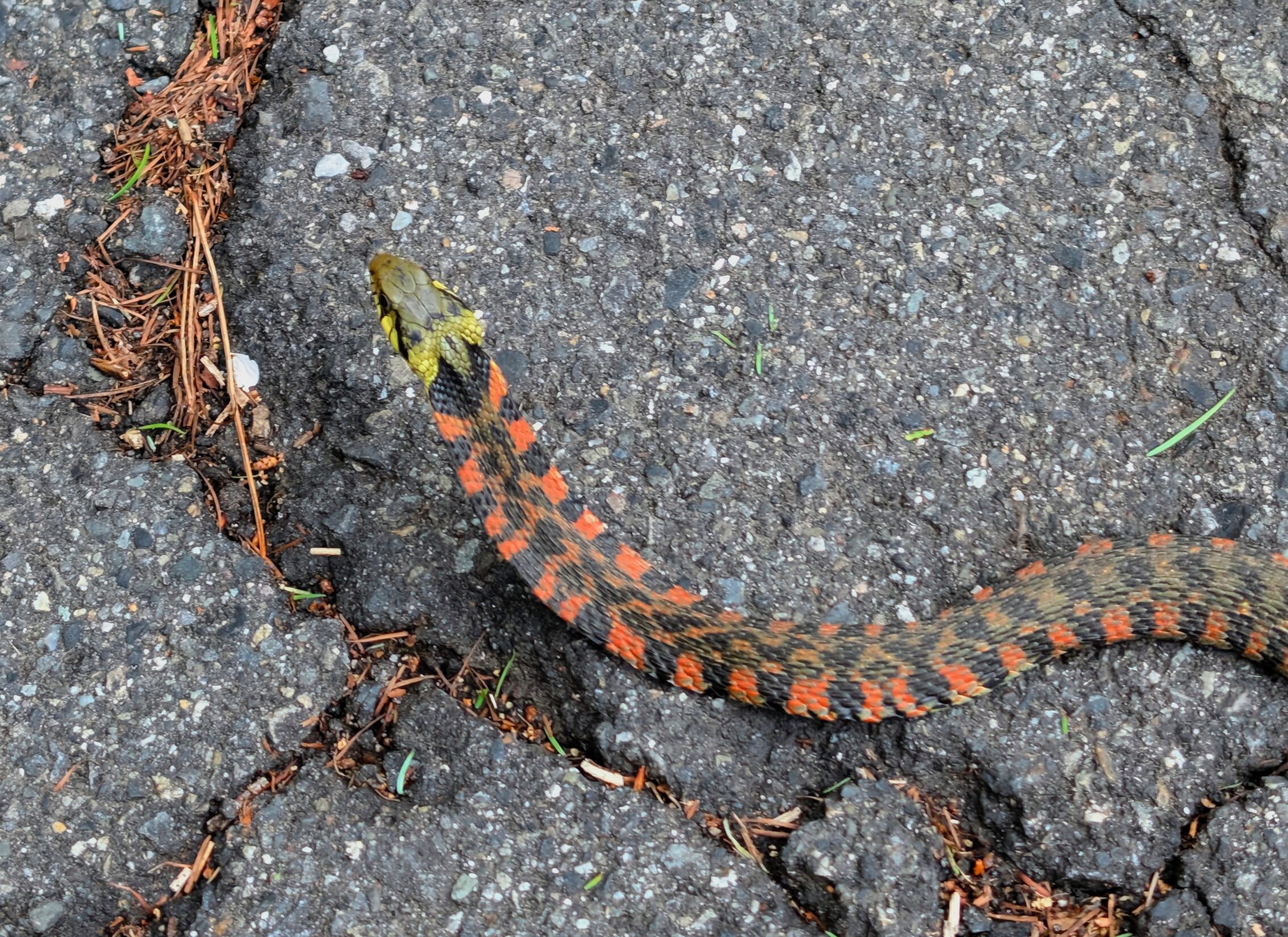
Also no, I am not as close to the animal as it looks in the pictures. As you can see the snake has lifted its head above the ground as it moves away. This is to expose the glands where the defensive poisons are, making it more likely that a predator touches it if it would attack. This snake is not particularly happy with me, but the alternative would be risking its death by car and I really didn’t want that.
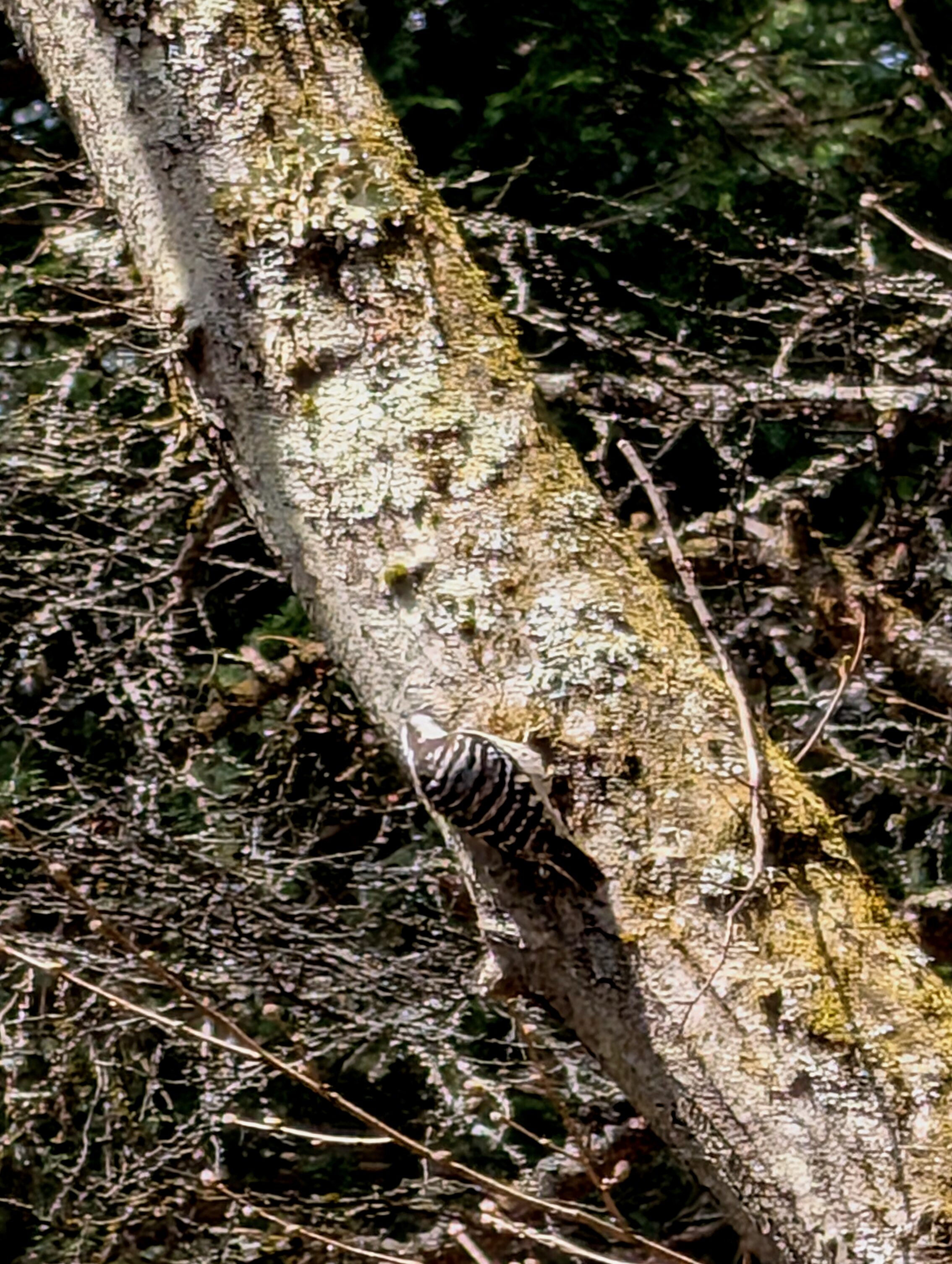
Finally I saw a Japanese Pygmy Woodpecker! This is cheating a bit since it was actually yesterday, but, still. Tiny tiny woodpecker!
Stay tuned for more of the usual stuff. In the meantime, you can admire snek! a bit more.
Leave a Reply