In the early to mid 19th century, the master artist Utagawa Hiroshige made a series of woodprints, ukiyo-e, of the 53 stations along the Tōkaidō road between Tokyo and Kyoto. In contrast to the Nakasendō, the Tōkaidō hugs the coast instead of going throught the mountains. These prints, along with one each of the starting point in Edo and endpoint i Kyoto were published in 1833-34, and proved to be wildly popular. So Hiroshige together with another ukiyo-e artist, Keisai Eisen produced a similar work detailing the post stations of the Nakasendō. It is called the Sixty-nine Stations of the Kiso Kaidō, and consists of one print for each post station (except Nakatsugawa that gets two) and one for Edo, for a total of 71 prints. The Kiso Kaidō is another name for the Nakasendō.
This series of prints were released from 1834 to 1842, and Hiroshige made 47 of them – most of them of the later parts of the Nakasendō nearer Kyoto, with Eisen being responsible for the rest. These prints were also very popular, but interest in the art of woodblock printing and painting was generally on the decline in favour for more modern techniques.
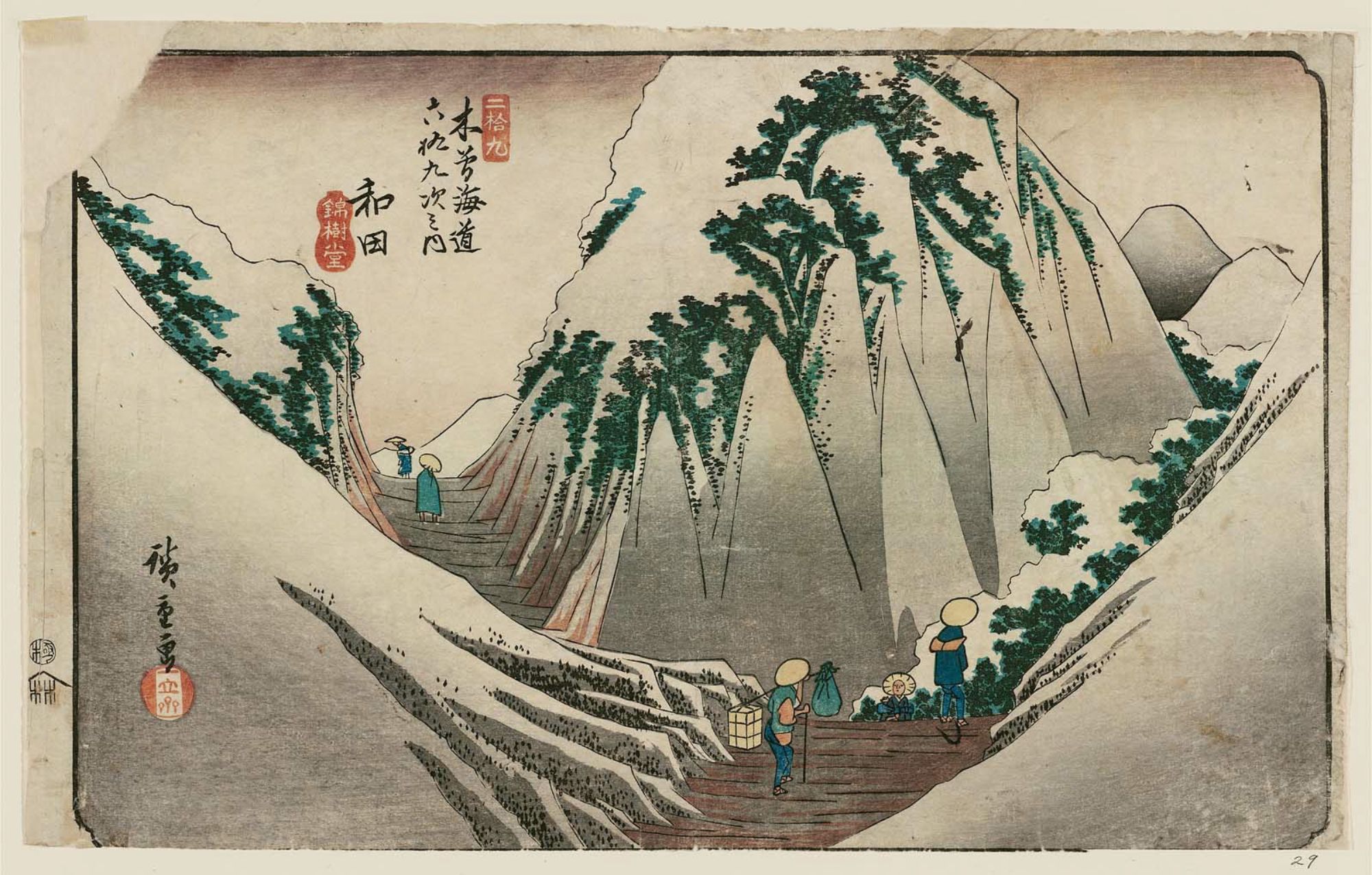
The featured image up above on this post was made by Hiroshige, and shows the Wada pass deep in winter. Luckily, I didn’t have that much snow when I traversed that mountain.
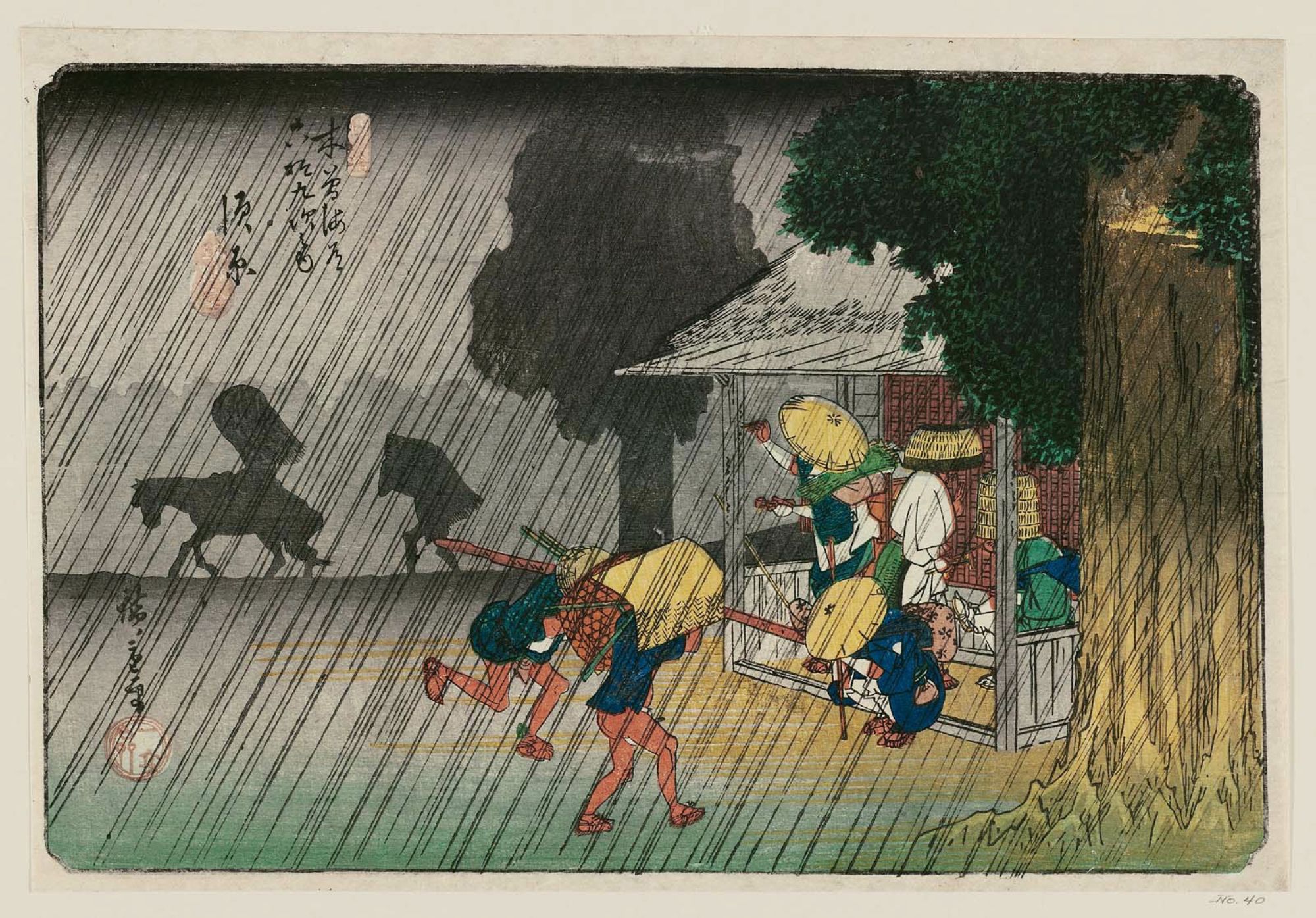
This woodblock print of Suhara-juku was made by Eisen.
Eisen also created the one for Narai-juku.
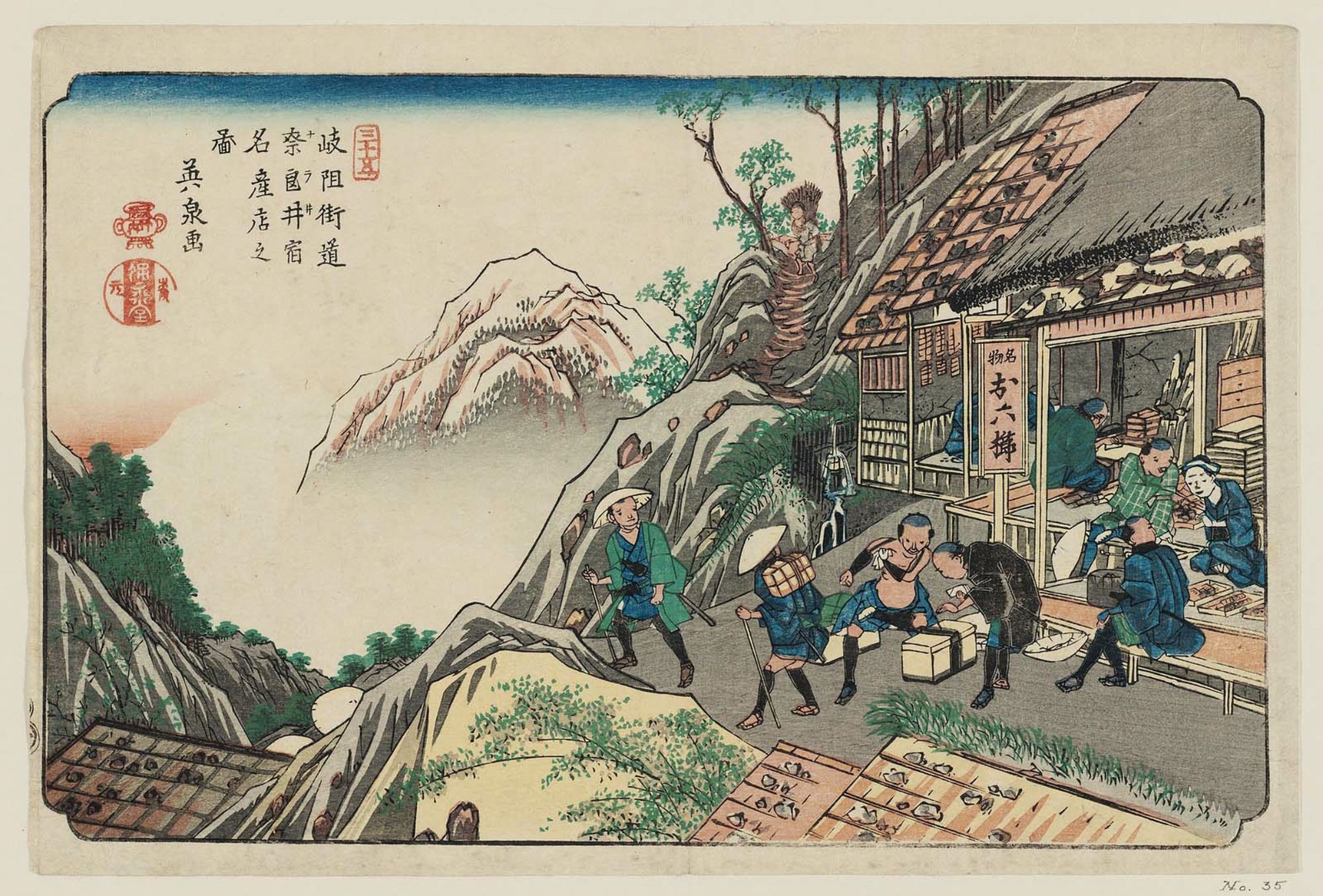
Eisen did a lot of the Kiso valley prints. This one of Nojiri-juku is famous for a lot of things, including that it is very wrong in many aspects! That the various woodblock prints of the post stations show things that don’t exist isn’t uncommon. Features were sometimes embellished, such as the height of waterfalls, the steepness of mountainsides, and the size of trees; and sometimes things you can’t see in one place were mushed together for the benefit of the viewer, for instance the view of Mt. Ontake in the picture above of Narai-juku.
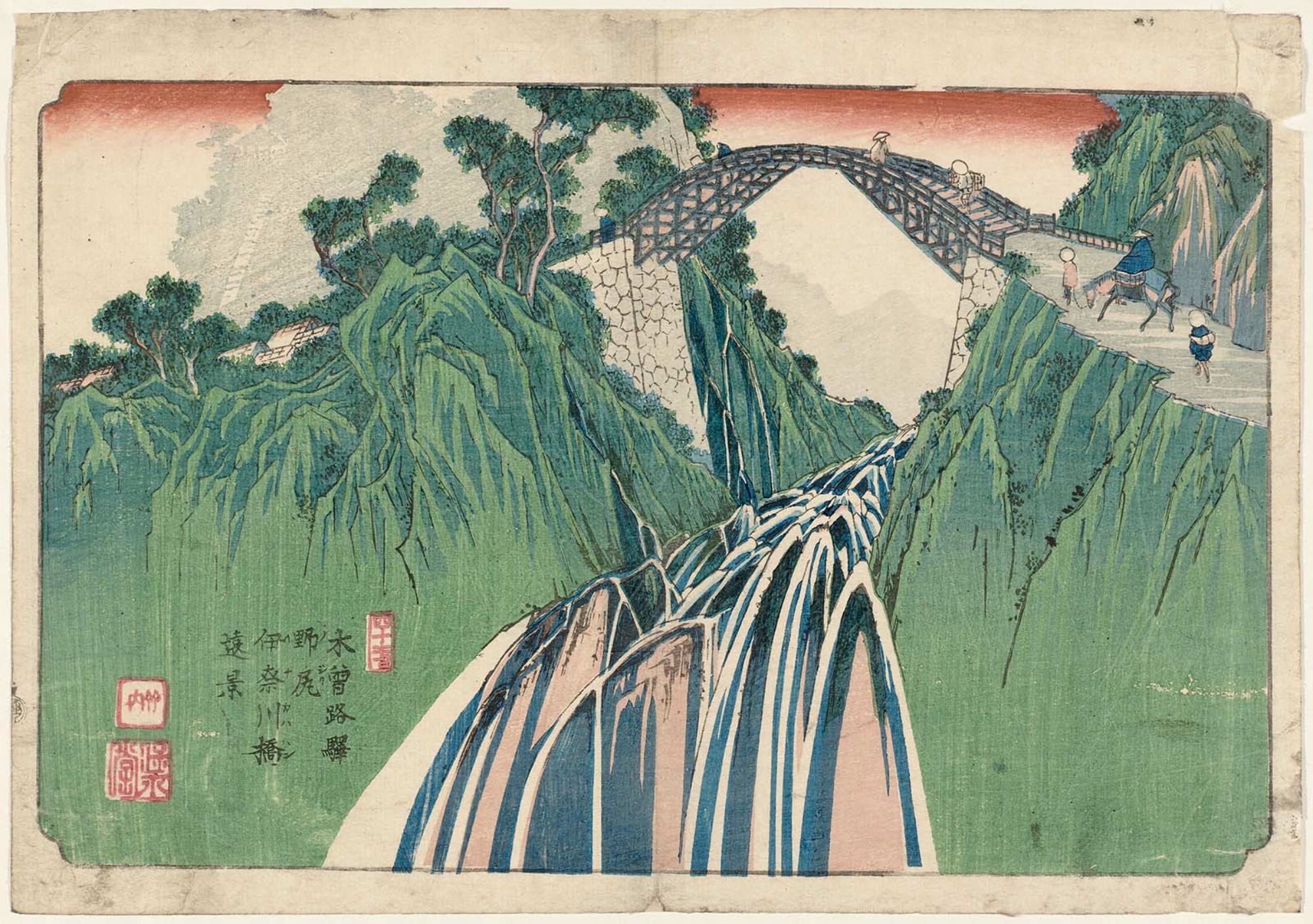
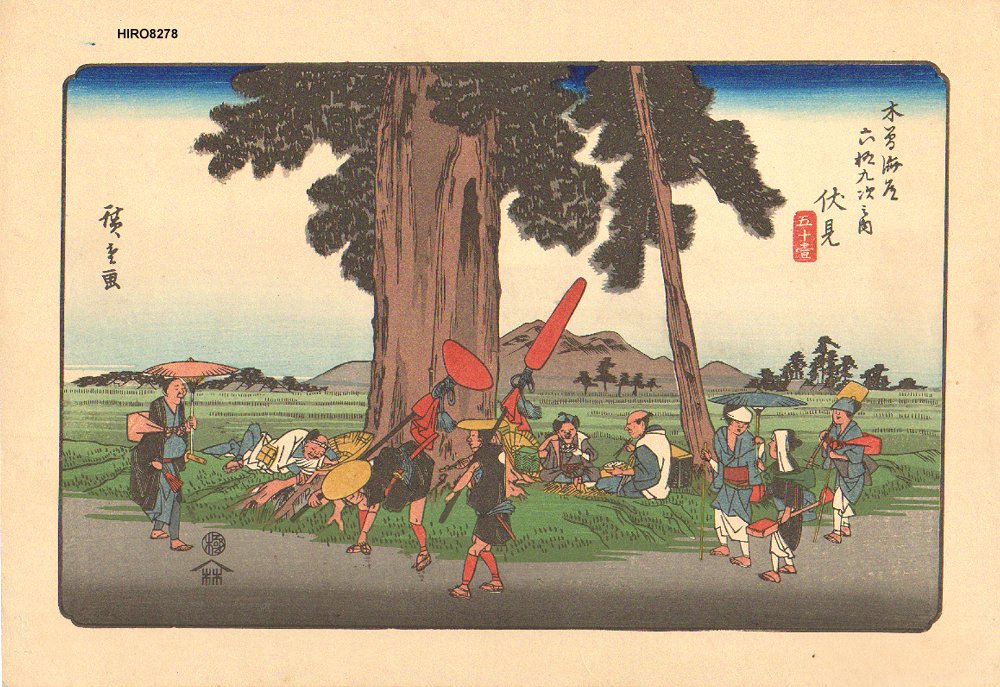
Regardless of the veracity of the imagery in all of these fantastic pieces of art, they have played a vital role in helping historians get a better picture of what life was like during the late Edo period. What kind of clothing travellers wore, how much they carried, and who was actually out and about on the road. Hiroshige’s representation of Fushimi-juku for instance, shows a very ordinary slice of life while travelling on the Nakasendō.
All pictures on this post has been borrowed from the fantastic ukiyo-e.org, that in turn has collected them from various institutions across the web, and made them available in a single place.
Leave a Reply